As a provider of Energy Recovery Ventilators (ERVs), I’m often asked about how to calculate the energy savings these devices can bring. Energy savings are a crucial aspect for both residential and commercial building owners, as they directly impact operational costs and environmental footprints. In this blog post, I’ll walk you through the process of calculating the energy savings of an ERV, providing a step – by – step guide and highlighting some key factors to consider. Energy Recovery Ventilator
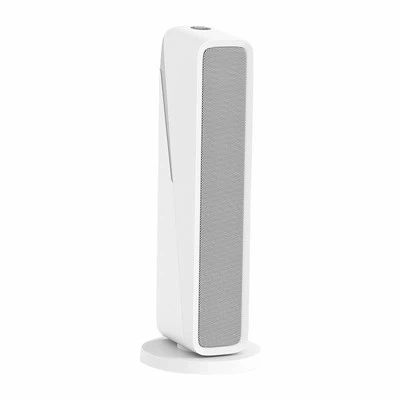
Understanding Energy Recovery Ventilators
Before delving into the calculation, it’s essential to understand what an ERV is and how it works. An Energy Recovery Ventilator is a mechanical ventilation system that exchanges stale indoor air with fresh outdoor air while recovering the energy from the exhaust air to pre – condition the incoming air. There are two main types of energy recovery: sensible and latent. Sensible energy recovery involves heat transfer, which warms or cools the incoming air, while latent energy recovery deals with moisture transfer, reducing or increasing humidity as needed.
Step 1: Determine the Ventilation Rate
The first step in calculating energy savings is to establish the ventilation rate of the building. This is typically measured in cubic feet per minute (CFM) or cubic meters per hour (m³/h). The ventilation rate depends on several factors, including the size of the building, the number of occupants, and the use of the space.
For residential buildings, the American Society of Heating, Refrigerating and Air – Conditioning Engineers (ASHRAE) recommends a minimum ventilation rate of 0.35 air changes per hour (ACH) or 15 CFM per person, whichever is greater. For commercial buildings, the requirements vary significantly based on the type of business. For example, an office may need 15 – 20 CFM per person, while a restaurant may require 35 – 50 CFM per person due to the presence of cooking and potential odors.
Let’s assume we are dealing with a 2,000 – square – foot office building with a ceiling height of 8 feet and ten occupants. First, calculate the volume of the space:
Volume = Length × Width × Height
Volume = 2000 ft²× 8 ft = 16,000 ft³
If we use the 15 CFM per person rule, the total ventilation rate (V) would be:
V = 15 CFM/person × 10 people = 150 CFM
Step 2: Analyze the Energy Recovery Efficiency
The energy recovery efficiency of an ERV is a measure of how effectively it transfers energy between the exhaust and incoming air. It is usually expressed as a percentage. There are two main efficiency ratings: sensible efficiency and total (sensible + latent) efficiency.
Sensible efficiency (Es) tells you how well the ERV transfers heat. Total efficiency (Et) takes into account both heat and moisture transfer. When calculating energy savings, you need to decide which efficiency rating to use, depending on whether you are mainly concerned with heating/cooling costs (sensible) or also with humidity control (total).
Most ERVs on the market have a sensible efficiency ranging from 60% to 80% and a total efficiency between 50% and 70%. Let’s assume our ERV has a sensible efficiency of 70% and a total efficiency of 60%.
Step 3: Calculate the Energy Demand without an ERV
To understand the savings, we first need to calculate the energy required to condition the incoming fresh air without an ERV. This involves calculating the heat or cold load associated with bringing the outdoor air to the indoor temperature and humidity conditions.
We’ll start with the sensible heat load. The sensible heat load (Qh) to condition the incoming air can be calculated using the formula:
Qh = 1.08 × CFM × (Ti – To)
where:
- 1.08 is a constant that accounts for the specific heat of air and the density of air.
- CFM is the ventilation rate.
- Ti is the indoor temperature in degrees Fahrenheit.
- To is the outdoor temperature in degrees Fahrenheit.
Let’s assume the indoor temperature (Ti) is 72°F, and the outdoor temperature (To) varies seasonally. In winter, assume To = 32°F, and in summer, assume To = 90°F. Using the ventilation rate of 150 CFM calculated earlier:
In winter:
Qh_winter = 1.08 × 150 CFM×(72°F – 32°F)
Qh_winter = 1.08 × 150 × 40
Qh_winter = 6480 BTU/h
In summer:
Qh_summer = 1.08 × 150 CFM×(90°F – 72°F)
Qh_summer = 1.08 × 150 × 18
Qh_summer = 2916 BTU/h
Step 4: Calculate the Energy Demand with an ERV
When an ERV is installed, it pre – conditions the incoming air, reducing the energy required to fully condition it. The sensible heat load with an ERV (Qh_ERV) can be calculated using the formula:
Qh_ERV = (1 – Es) × Qh
where Es is the sensible efficiency of the ERV.
In winter:
Qh_ERV_winter = (1 – 0.7)×6480 BTU/h
Qh_ERV_winter = 0.3×6480 = 1944 BTU/h
In summer:
Qh_ERV_summer = (1 – 0.7)×2916 BTU/h
Qh_ERV_summer = 0.3×2916 = 874.8 BTU/h
Step 5: Calculate the Energy Savings
The energy savings can be calculated by subtracting the energy demand with the ERV from the energy demand without the ERV.
In winter:
Energy savings_winter = Qh_winter – Qh_ERV_winter
Energy savings_winter = 6480 – 1944 = 4536 BTU/h
In summer:
Energy savings_summer = Qh_summer – Qh_ERV_summer
Energy savings_summer = 2916 – 874.8 = 2041.2 BTU/h
Step 6: Convert Energy Savings to Cost Savings
To determine the cost savings, you need to know the cost of energy. In the United States, the cost of electricity can vary from region to region, but on average, it’s around $0.13 per kilowatt – hour (kWh), and the cost of natural gas is approximately $1.00 per therm (1 therm = 100,000 BTU).
Let’s assume the building uses natural gas for heating in winter and electricity for cooling in summer.
Energy savings_winter (in therms) = 4536 BTU/h÷100,000 BTU/therm = 0.04536 therms/h
If the building operates 10 hours a day in winter, the daily energy savings in winter = 0.04536 therms/h×10 h = 0.4536 therms
Monthly cost savings in winter (assuming a 30 – day month) = 0.4536 therms/day×30 days×$1.00/therm = $13.61
Energy savings_summer (in kWh): First, convert BTU to kWh. 1 kWh = 3412 BTU
Energy savings_summer (in kWh) = 2041.2 BTU/h÷3412 BTU/kWh = 0.598 kWh/h
If the building operates 10 hours a day in summer, the daily energy savings in summer = 0.598 kWh/h×10 h = 5.98 kWh
Monthly cost savings in summer (assuming a 30 – day month) = 5.98 kWh/day×30 days×$0.13/kWh = $23.32
Additional Factors to Consider
- Climate: The climate of the location plays a significant role in the energy savings. In regions with extreme temperatures, the savings will be more substantial than in milder climates.
- Building Envelope: A well – insulated and air – tight building will have different ventilation requirements and may experience different levels of energy savings.
- Usage Patterns: The frequency of building occupancy and the operation of the ventilation system also impact the overall savings.
Conclusion

Calculating the energy savings of an Energy Recovery Ventilator involves understanding the ventilation needs of the building, the efficiency of the ERV, and the energy cost in the area. As a provider of ERVs, I can attest to the significant energy and cost savings these devices can offer. Whether you’re a homeowner looking to reduce your utility bills or a business owner aiming to cut operational costs, an ERV can be a valuable investment.
Energy Recovery Ventilator If you’re interested in learning more about how an ERV can benefit your specific situation or if you’re ready to discuss a purchase, feel free to reach out. Our team of experts is here to help you make an informed decision and select the right ERV for your needs.
References
- ASHRAE Standard 62.1 – 2019, Ventilation for Acceptable Indoor Air Quality
- Energy Star’s Guidelines on Energy Recovery Ventilators
Shengzhou Geeking Electric Appliance Technology Co., Ltd.
We’re well-known as one of the leading energy recovery ventilator manufacturers and suppliers in China. With abundant experience, we warmly welcome you to buy bulk discount energy recovery ventilator in stock here and get free sample from our factory. Quality products and low price are available.
Address: No. 19, Putian Avenue, Pukou Subdistrict, Shengzhou City
E-mail: 13588516010@163.com
WebSite: https://www.geekingfan.com/
