Hey there! As a supplier of turn-mill machines, I often get asked about the weight of these bad boys. It’s a pretty important factor, whether you’re setting up a new workshop or planning to move your existing equipment. So, let’s dive right into what determines the weight of a turn-mill machine and why it matters. Turn‑Mill Machine Machine
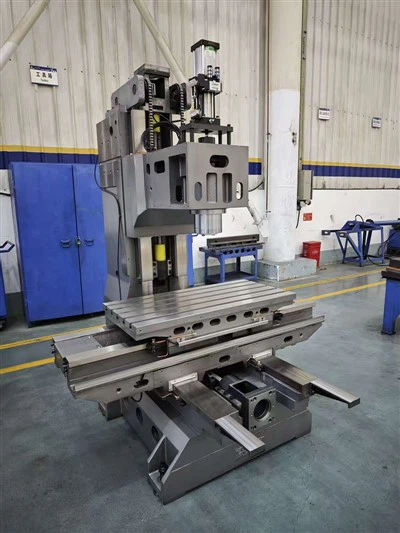
First off, what the heck is a turn-mill machine? Well, it’s a multi-tasking machine tool that combines the functions of a turning center and a milling machine. This means it can perform both turning and milling operations in one setup, which is super handy for making complex parts with high precision.
Now, let’s talk about what affects the weight of a turn-mill machine. The size of the machine is a major factor. Larger machines generally weigh more because they have bigger components. For example, a small benchtop turn-mill machine might weigh around 500 – 1000 pounds (227 – 454 kilograms). These are great for small workshops or hobbyists who don’t need to produce large quantities of parts.
On the other hand, industrial-grade turn-mill machines can be massive. Some of the bigger ones can weigh upwards of 10,000 pounds (4536 kilograms) or even more. These machines are designed for high-volume production in large manufacturing plants. They have more robust structures, larger motors, and bigger cutting tools, all of which contribute to their hefty weight.
The materials used in the construction of the machine also play a big role. Most turn-mill machines have a cast iron base because it’s heavy and provides excellent stability. Cast iron is dense and can absorb vibrations during the machining process, which helps to improve the quality of the finished parts. The columns, saddles, and other components might also be made of cast iron or steel, which adds to the overall weight.
Another factor is the number of axes and the complexity of the machine. Turn-mill machines can have different numbers of axes, typically ranging from 3 to 5 or more. Machines with more axes can perform more complex operations, but they also require more components and control systems. This additional hardware adds to the weight of the machine. For instance, a 5-axis turn-mill machine will generally weigh more than a 3-axis one.
Why does the weight of a turn-mill machine matter? Well, for starters, it affects the stability of the machine. A heavier machine is less likely to vibrate during operation, which leads to better surface finish and dimensional accuracy of the parts. This is especially important when you’re working on high-precision jobs.
Transportation and installation are also big considerations. Moving a heavy turn-mill machine can be a real pain in the butt. You need to have the right equipment, like a forklift or a crane, to lift and move it safely. And when it comes to installation, you need to make sure the floor can support the weight of the machine. If the floor isn’t strong enough, it could lead to problems like uneven wear on the machine or even damage to the building.
Let’s take a look at some real-world examples. I’ve got a few customers who were upgrading their workshops. One of them was a small job shop that was moving from a smaller turn-mill machine to a larger, more advanced one. They were really surprised by how much heavier the new machine was. They had to reinforce the floor in their workshop to make sure it could handle the weight.
Another customer was a large automotive parts manufacturer. They were expanding their production capacity and needed to install several turn-mill machines in a new facility. They had to plan the layout of the factory carefully, taking into account the weight of the machines and the space required for transportation and maintenance.
So, if you’re in the market for a turn-mill machine, it’s important to consider the weight. Think about where you’re going to put the machine, how you’re going to move it, and whether your workshop can handle the load. And of course, don’t forget about the performance and features of the machine. You want to make sure it meets your production needs.
As a supplier, I can help you choose the right turn-mill machine for your business. I’ve got a wide range of machines in different sizes and weights, so I can find one that fits your requirements and budget. Whether you’re a small business owner or a large manufacturer, I’ve got the expertise to guide you through the selection process.
If you’re interested in learning more about our turn-mill machines or have any questions about the weight or other aspects of the machines, don’t hesitate to get in touch. We can have a chat, discuss your needs, and see if our machines are the right fit for you.
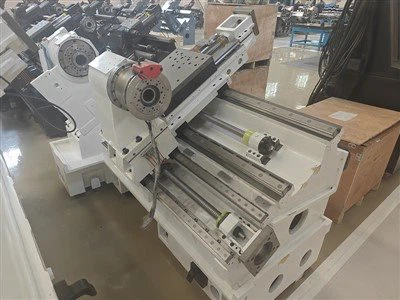
In conclusion, the weight of a turn-mill machine is an important factor that can have a big impact on your workshop operations. By understanding what affects the weight and why it matters, you can make a more informed decision when purchasing a machine. So, if you’re ready to take your production to the next level, let’s talk!
XY Linear Way Vertical Machining Center References:
- "Machining Technology: An Introduction" by Robert L. Norton
- "CNC Machining Handbook" by Peter Smid
Smartech Machinery & Equipment Co., Ltd.
As one of the most professional turn‑mill machine machine manufacturers and suppliers in China, we also support customized service. Please rest assured to buy bulk turn‑mill machine machine made in China here from our factory. Contact us for more details.
Address: Room 2832, Changping Commercial Mansion, Shihua Road, Futian Free Trade Zone, Shenzhen, China
E-mail: smartech@smartechcnc.cn
WebSite: https://www.smartech-cnc.com/
