As a supplier of welding wire winding machinery, I’ve spent countless hours on factory floors, troubleshooting equipment, and listening to the challenges welders and production managers face when their wire doesn’t spool correctly. The conversation almost always turns to wire breakage, inconsistent tension, or spool misalignment—issues that are rarely just about the winding machine’s gears or spool holders. Nine times out of ten, the root cause ties back to one component: the power supply. Too often, this part is treated as an afterthought, a simple “plug-and-play” piece that works as long as it delivers electricity. But over the years, I’ve seen firsthand how a properly matched power supply can turn a mediocre winding line into a high-output, low-waste operation, while a mismatched or underperforming unit can bring even the most advanced machinery to a grinding halt. Let’s break down exactly what role the power supply plays here, and why it’s non-negotiable for anyone relying on consistent, high-quality welding wire. Welding Wire Winding Machinery
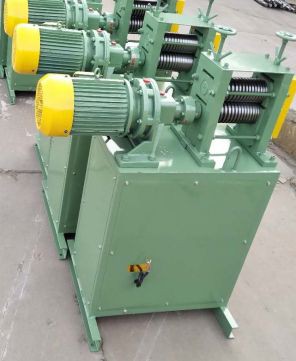
First, let’s ground this in what welding wire winding machinery does, because the power supply’s job is entirely dependent on the machine’s core functions. Welding wire winding machines aren’t just devices that wrap wire around spools—they do it in a precise, controlled way. The wire is produced in a continuous strand, drawn through dies to adjust diameter, coated to prevent rust, and then must be wound onto spools without tangles, tension inconsistencies, or damage to the coating. For flux-cored wire, solid wire, or aluminum wire, even a tiny variation in tension can ruin an entire spool: too little tension, and the wire slackens, tangles, or layers unevenly; too much tension, and the wire stretches, breaks, or cracks the protective coating. The power supply is what drives every motor, sensor, and control system that manages this tension and movement.
Let’s start with the most visible role: power delivery for the primary winding motor. Most modern winding machines use either stepper motors or servo motors for the winding head and traverse mechanism (the part that moves the wire back and forth evenly across the spool). Stepper motors rely on pulsed DC power to move in precise, incremental steps—critical for creating an even, uniform wrap pattern. Servo motors, used for higher-speed lines, need consistent AC or DC power to adjust speed and tension in real time as spool diameter increases. If the power supply here is inconsistent—say, it drops 5% of voltage during peak load, or has electrical noise that disrupts the motor’s signals—the motor’s movement becomes erratic. I once worked with a fabricator in Detroit that was wasting 12% of its welding wire monthly due to uneven spools; their old power supply couldn’t handle the variable load of a 15-kilogram spool. After we upgraded their power supply to a regulated unit that matched their servo motor’s specifications, wire waste dropped to less than 1%, and their output increased by 18%. That’s not a small number—for a shop running 24/7, that translates to thousands of dollars saved per month.
Beyond the motor, the power supply supports the machine’s entire control and sensing ecosystem. Welding wire lines have dozens of small sensors: tension sensors that measure the force on the wire as it wraps, diameter sensors that check wire thickness, and encoder sensors that track the position of the traverse mechanism. These sensors draw tiny amounts of power, but they’re extremely sensitive to voltage fluctuations. A sensor that runs on 24V DC will give false readings if the power supply dips to 21V, which can trigger the machine’s controller to adjust tension incorrectly. I saw this last year at a welding supply company in Texas: their winding machine’s tension sensor kept misreading, leading to frequent wire breaks and spools that were rejected for quality control. The problem wasn’t the sensor itself—it was a cheap, unregulated power supply that was causing a 3V ripple on the sensor’s power line. Replacing it with a linear power supply designed for industrial sensing equipment fixed the issue overnight. The team didn’t have to re calibrate sensors or upgrade motors; they just fixed the power supply, and their downtime dropped by 22% that quarter.
Another often-overlooked role is power protection. Welding wire manufacturing environments are tough: there’s heavy machinery nearby, frequent electrical spikes from other equipment, and sometimes dirty power from the grid. A power supply with built-in surge protection, overvoltage protection, and short-circuit protection acts as a buffer between the machine and the grid, preventing damage to the winding machine’s more expensive components. I’ve heard of companies that saved tens of thousands of dollars in repairs because their power supply absorbed a lightning surge that would have fried their servo motor and control board. On the flip side, a power supply without protection can lead to unexpected failures in the middle of a production run—costing not just repair parts, but lost output and missed deadlines. That’s a critical point for small to medium-sized fabricators who can’t afford hours of downtime; a $500 power supply is a tiny investment compared to a $10,000 repair bill and a lost customer.
Wait, but not all power supplies are the same, right? That’s why as a winding machinery supplier, we don’t just sell machines—we work with customers to match the right power supply for their specific needs. A machine that runs 5kg spools of small-diameter solid wire has different power requirements than a line that winds 25kg spools of thick flux-cored wire. For low-speed, small-batch operations, a regulated DC power supply with simple surge protection is usually enough. For high-speed, high-volume lines running 24/7, we recommend a more robust industrial power supply with active power factor correction (PFC), which improves energy efficiency and reduces strain on the machine’s components. Some manufacturers even use variable frequency drives (VFDs) integrated into the power supply, which let users adjust motor speed on the fly without adding extra parts. I can’t tell you how many times a customer has come to us after buying a generic power supply from a hardware store, only to find it doesn’t work with their machine’s motor specifications. Generic power supplies might fit the plug, but they can’t deliver the consistent, clean power the winding line needs.
There’s also a role we don’t talk about much: supporting specialized features in modern winding machinery. Today’s top-of-the-line lines have automated changeovers, where a robot or conveyor brings a new spool and the machine switches over without stopping. These changeovers require precise, timed power signals to the spool chuck, the wire cutter, and the traverse mechanism. If the power supply lags even a fraction of a second, the changeover can fail, leading to a machine shutdown. We recently installed a line for a European welding wire producer that has a power supply with fast-switching capabilities, allowing it to deliver 100% power to the changeover system within 10 milliseconds. Before that, their changeovers were taking 2 minutes each, but now they take 20 seconds, boosting their overall output by 10%. That’s the power supply doing more than just “making power”—it’s enabling the machine’s advanced automation.
Let’s address a common misconception here: some buyers think that the power supply’s wattage is the only thing that matters. But wattage is important, but voltage stability, noise level, and response time are equally critical. For example, a power supply that’s rated for 1000 watts but has a 10% voltage ripple is worse than a 800-watt power supply with no ripple, because the ripple will interfere with sensors and motor control. We always advise customers to look at the total harmonic distortion (THD) rating of the power supply—lower THD means cleaner power, which is less likely to cause issues with sensitive electronics. For winding machinery, we target THD below 5%, which is well within industrial standards but makes a huge difference in performance.
I’ll also share a mistake we see customers make all the time: they upgrade their winding machine’s motors or automation, but stick with the original power supply that came with the machine. That’s a recipe for problems. If you upgrade to a higher-torque servo motor, you need a power supply that can deliver the extra current the motor needs to operate at peak performance. If you add tension control sensors, you need a power supply that can power those sensors without noise. Last year, a customer in Canada upgraded their winding machine from 5kg to 15kg spools, but kept their old 500-watt power supply. Within two weeks, the motor was overheating, and they had to replace it. We worked with them to size a 1200-watt power supply with PFC, and they haven’t had a motor issue since. It’s a small change, but it makes all the difference.
So what does this mean for anyone in the welding wire industry? If you’re dealing with wire breakage, inconsistent spools, or frequent machine downtime, don’t just look at the motors or sensors—start with the power supply. It’s a component that’s easy to overlook, but it’s the backbone of your winding operation. As a supplier, we don’t just sell winding machinery; we offer power supply compatibility testing, custom sizing, and ongoing support to make sure every part of the line works together. We’ve seen too many production managers waste time and money chasing the wrong solutions, when the fix is as simple as upgrading or optimizing the power supply.
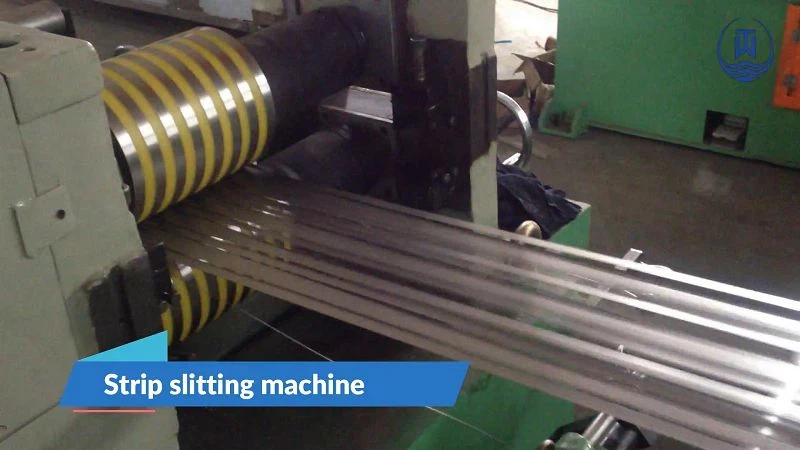
If you’re currently facing challenges with your welding wire winding line, or you’re looking to upgrade an existing operation, I encourage you to reach out. We can walk you through the power requirements for your specific wire type, spool size, and production volume, and help you build a system that maximizes output, minimizes waste, and reduces downtime. Don’t let an overlooked component hold your operation back—your power supply deserves as much attention as the winding motor or spool holders.
Other Auxiliary Equipment References
- Miller, D. (2021). Industrial Power Supplies for Automated Manufacturing. Industrial Press Inc.
- Welding Wire Manufacturing: Processes and Equipment (2nd ed.). (2019). AWS Publishing.
- Servo Motor and Drive Application Guidelines. (2020). Motion Control Association.
- Electrical Noise and Its Impact on Industrial Sensor Performance. (2018). Journal of Industrial Electronics.
- High-Volume Wire Winding Operations: Efficiency Best Practices. (2022). Manufacturing Engineering Society International Conference.
Three Water Machinery Co., Ltd.
Three Water Machinery Co., Ltd. is one of the most reliable manufacturers and suppliers of welding wire winding machinery in China. With abundant experience, we warmly welcome you to buy advanced equipment for sale here and get quotation from our factory. Contact us for more details.
Address: No.15, Jiaye Road, Liuanzhuang Industrial Park, Beichen District, Tianjin, China
E-mail: sales@eqet.com
WebSite: https://www.eqet.com/
