What are the types of pistons?
As a trusted piston supplier, I’ve had the privilege of witnessing the diverse and ever – evolving world of pistons. Pistons are fundamental components in various engines, serving as the heart of the power – generating process. They come in a wide range of types, each tailored to meet specific requirements based on the engine’s application, design, and performance needs. In this blog, I’ll delve into the different types of pistons and what makes them unique. Piston
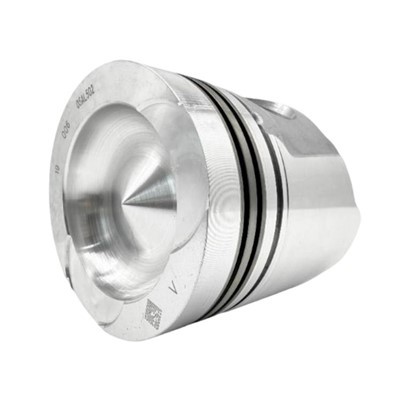
1. Cast Pistons
Cast pistons are among the most common types in use today. They are manufactured through a casting process where molten metal, typically aluminum alloy, is poured into a mold. The simplicity of the casting process makes them cost – effective to produce, which is a significant advantage for mass – market applications.
One of the key characteristics of cast pistons is their relatively lower strength compared to some other types. However, modern casting techniques and alloy formulations have significantly improved their durability. Cast pistons are suitable for engines with moderate performance requirements, such as those in many passenger cars. They can handle normal operating temperatures and pressures without excessive wear, making them a reliable choice for everyday driving.
The microstructure of cast pistons is fine – grained, which provides good dimensional stability. This is crucial as it ensures the piston fits precisely within the cylinder bore, minimizing piston slap and reducing the likelihood of engine noise. Additionally, cast pistons can have features such as internal ribs and grooves designed to optimize oil flow and heat dissipation.
2. Forged Pistons
Forged pistons, on the other hand, are crafted through a forging process. This involves applying extreme pressure to a block of metal, usually aluminum or steel, to shape it into the desired piston form. The forging process aligns the grain structure of the metal, resulting in a piston with superior strength and toughness.
Forged pistons are the go – to choice for high – performance and racing engines. They can withstand the high pressures and temperatures generated in these engines, which often operate at much higher RPMs and under more demanding conditions. For example, in a turbocharged or supercharged engine, the increased boost pressure can put significant stress on the pistons. Forged pistons can handle this extra load without cracking or deforming.
The strength of forged pistons also allows for more precise machining and tighter tolerances. This means that they can be designed to fit the cylinder bore even more accurately, improving engine efficiency and power output. However, the forging process is more complex and costly than casting, which is reflected in the price of forged pistons.
3. Hypereutectic Pistons
Hypereutectic pistons are a special type of aluminum piston. They are made from an aluminum alloy with a high silicon content, typically above the eutectic point. The high silicon content gives these pistons several unique properties.
One of the main advantages of hypereutectic pistons is their low thermal expansion rate. This means that they maintain a more consistent size over a wide range of operating temperatures. As a result, they can be machined to a closer fit within the cylinder bore right from the start, reducing the need for piston slap during engine warm – up.
Hypereutectic pistons also have good wear resistance due to the hard silicon particles in the alloy. This makes them suitable for engines that require long – term reliability, such as those in some industrial and heavy – duty applications. Additionally, they offer a good balance between cost and performance, being less expensive than forged pistons while still providing better performance than standard cast pistons.
4. Monotherm Pistons
Monotherm pistons are designed with a unique thermal management system. They typically have a special skirt design and a thermal – barrier coating on the piston crown. The skirt design is engineered to reduce friction and improve the piston’s stability within the cylinder bore.
The thermal – barrier coating on the piston crown helps to insulate the piston from the high – temperature combustion gases. This reduces heat transfer to the piston, which in turn reduces the thermal stress on the piston and other engine components. By keeping the temperature of the piston lower, the engine can operate more efficiently and with less risk of detonation.
Monotherm pistons are commonly used in engines where fuel efficiency and performance are critical, such as in some modern diesel engines and high – end gasoline engines. They allow the engine to run at higher compression ratios without the risk of knocking, which can lead to increased power output and better fuel economy.
5. Coated Pistons
Coated pistons have a thin layer of special material applied to their surface. There are different types of coatings available, each with its own set of benefits.
One common type of coating is a low – friction coating, such as molybdenum disulfide or graphite. This coating reduces the friction between the piston and the cylinder wall, which can improve engine efficiency and reduce wear. By reducing friction, the engine has to work less hard to overcome the resistance, resulting in better fuel economy and potentially longer engine life.
Another type of coating is a thermal – barrier coating, similar to that used on monotherm pistons. This coating helps to keep the heat in the combustion chamber, improving the engine’s thermal efficiency. Additionally, some coatings can provide corrosion resistance, protecting the piston from the harsh chemicals and high – temperature environment within the engine.
6. Two – Piece Pistons
Two – piece pistons are constructed from two separate components that are assembled together. Typically, the piston crown and the skirt are made as two distinct parts and then joined, usually through a pin or a threaded connection.
The advantage of two – piece pistons is that they allow for more flexibility in design. For example, different materials can be used for the crown and the skirt, depending on their specific requirements. The piston crown, which is exposed to the high – temperature combustion gases, can be made from a high – strength alloy, while the skirt can be made from a material with good friction and wear characteristics.
Two – piece pistons are often used in large – displacement engines and marine engines, where the design requirements are more complex. They can also be easier to repair or modify compared to one – piece pistons, which can be a significant advantage in some applications.
In conclusion, the world of pistons is rich and diverse, with each type offering unique features and benefits. As a piston supplier, I understand the importance of matching the right piston type to the specific needs of an engine. Whether it’s a cast piston for a budget – friendly passenger car, a forged piston for a high – performance racing machine, or a hypereutectic piston for a reliable industrial engine, we have the expertise to provide the best solution.
YUNNEI Piston If you’re in the market for pistons and want to discuss your specific requirements, I encourage you to reach out. Our team of experts is ready to assist you in selecting the most suitable pistons for your application and to provide you with high – quality products and excellent customer service.
References
- Heywood, J. B. (1988). Internal Combustion Engine Fundamentals. McGraw – Hill.
- Taylor, C. F. (1966). The Internal – Combustion Engine in Theory and Practice, Vol. 1: Thermodynamics, Fluid Flow, Performance. MIT Press.
Hebei Yuwei Piston Co., Ltd.
As one of the most professional piston manufacturers and suppliers in China, we’re featured by quality products and good service. Please rest assured to buy customized piston made in China here from our factory. Also, quotation is available.
Address: Beizhujiacun Village, Sujiuzhuang Town, Ningjin County, Xingtai City, Hebei Province
E-mail: jack@ywpiston.com
WebSite: https://www.ywpiston.com/
