As a seasoned supplier in the farm tractor industry, I’ve witnessed firsthand the integral role that the Power Take – Off (PTO) plays in modern agricultural operations. In this blog, I’ll delve into the functions of the PTO on a farm tractor, exploring its significance, different types, and applications. Farm Tractor
The Basics of PTO
Let’s start with the fundamentals. The Power Take – Off is a mechanical device installed on a farm tractor that transfers power from the tractor’s engine to attached implements. It provides a way to convert the engine’s rotational energy into useful work for various agricultural tasks. Essentially, it acts as a bridge between the tractor and the equipment it pulls, enabling seamless operation of a wide range of implements.
How PTO Works
The PTO system is typically connected to the tractor’s transmission. When the PTO is engaged, power is transferred from the engine, through the transmission, and to the PTO shaft. This shaft then rotates at a specific speed, which is often standardized. In North America, the common PTO speed is 540 revolutions per minute (RPM), while 1000 RPM is also used for larger, more power – hungry implements.
The PTO shaft has a universal joint at each end, which allows for flexibility as the tractor and implement move relative to each other, ensuring a constant transfer of power even when the equipment is at different angles or heights.
Functions of PTO
1. Operating Harvesting Equipment
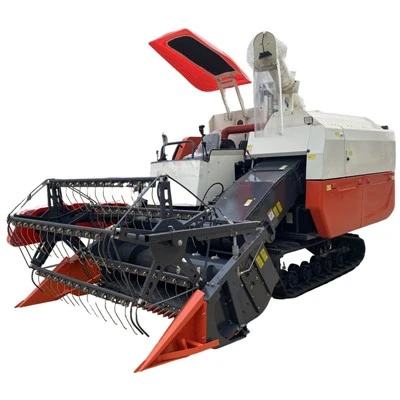
One of the primary functions of the PTO is to power harvesting equipment. For example, combines, which are used to harvest grains such as wheat, corn, and rice, rely on the PTO to drive the threshing and separating mechanisms. The high – power output of the PTO allows the combine to efficiently process large amounts of crops in a short period.
Hay balers are another essential piece of harvesting equipment powered by the PTO. They compress cut hay into bales for storage and transportation. The PTO provides the necessary force to operate the baling chamber, the twine – tying mechanism, and other components of the baler.
2. Soil Cultivation
PTO – driven cultivators are widely used for soil preparation. These implements break up and aerate the soil, improve its structure, and prepare it for planting. Rotary tillers, for instance, use the PTO power to rotate the tines at high speeds, effectively turning over the soil and incorporating organic matter. The PTO – powered cultivators can cover large areas quickly and evenly, making them a popular choice for farmers with extensive fields.
3. Mowing and Cutting
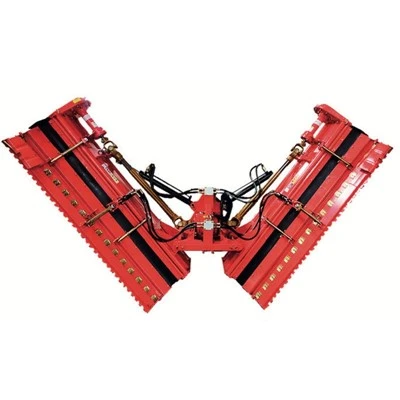
Lawn mowers, brush cutters, and forage harvesters are all commonly powered by the PTO. For large – scale lawn maintenance on farms or for clearing overgrown areas, PTO – driven mowers can cover large swaths of land in a short time. They have sharp blades that are powered by the PTO shaft, enabling them to cut through grass and weeds with ease.
Forage harvesters, which are used to harvest crops like corn silage, rely on the PTO to power the cutting and chopping mechanisms. The high – speed rotation provided by the PTO ensures that the crops are efficiently cut and chopped into small pieces for storage as livestock feed.
4. Pumping Water
In areas where irrigation is necessary, PTO – driven water pumps are a practical solution. These pumps can be used to draw water from wells, rivers, or lakes and distribute it to the fields. The power from the PTO allows the pump to generate high pressure, ensuring an adequate flow of water for proper irrigation. This is especially crucial in regions with limited water sources or where large – scale farming requires efficient water distribution.
Different Types of PTO
There are mainly two types of PTO systems: independent and non – independent.
1. Non – Independent PTO
In a non – independent PTO system, the PTO is directly linked to the tractor’s transmission. This means that when the tractor is in motion, the PTO is also engaged, and when the tractor stops, the PTO stops as well. Non – independent PTOs are simpler and less expensive, but they can be a bit limiting in some situations. For example, if you need to stop the tractor to adjust an implement while keeping the PTO running, you can’t do so with a non – independent PTO.
2. Independent PTO
An independent PTO has its own clutch, which allows it to be engaged or disengaged independently of the tractor’s transmission. This gives the operator more flexibility. You can stop the tractor to make adjustments to the implement or perform other tasks while the PTO continues to power the equipment. Independent PTOs are commonly found on larger, more advanced tractors and are preferred for complex agricultural operations.
Selection of PTO for Different Applications
When choosing a tractor with a PTO for a specific application, several factors need to be considered.
1. Power Requirements
Different implements have different power requirements. Smaller implements like garden tillers may require less power and can work well with a tractor having a lower – power PTO. On the other hand, large – scale harvesting equipment or high – capacity water pumps need a tractor with a high – power PTO, often operating at 1000 RPM.
2. Speed Compatibility
As mentioned earlier, PTO speeds are standardized. It’s essential to ensure that the speed of the PTO matches the requirements of the attached implement. Using an implement at an improper PTO speed can lead to inefficient operation, increased wear and tear, and even damage to the equipment.
3. PTO Type
Depending on the nature of the work, you need to decide between an independent and non – independent PTO. If your operations require frequent stopping and starting of the tractor while keeping the implement running, an independent PTO is a better choice. If simplicity and cost are your main concerns and the nature of the work allows the PTO to stop when the tractor stops, a non – independent PTO may be sufficient.
PTO Safety
Safety is paramount when working with the PTO. The rotating PTO shaft can be extremely dangerous. Operators should always wear appropriate protective clothing and ensure that the PTO shields are in place. The shields are designed to prevent people and objects from coming into contact with the rotating shaft. Additionally, before connecting or disconnecting an implement from the PTO, the tractor should be turned off, and the PTO should be disengaged.
Conclusion
The Power Take – Off is an indispensable part of a farm tractor. Its functions span across various agricultural operations, from harvesting to soil cultivation, mowing, and water pumping. Choosing the right PTO system based on power requirements, speed compatibility, and type is crucial for efficient and safe farming.
At our company, we understand the importance of a reliable PTO system. We offer a wide range of farm tractors equipped with high – quality PTOs to meet the diverse needs of our customers. Whether you’re a small – scale farmer or managing a large agricultural operation, we have the perfect tractor solution for you.
Agriculture Machinery Spare Parts If you’re interested in learning more about our farm tractors or want to discuss your specific requirements, please don’t hesitate to reach out. Our team of experts is ready to assist you in finding the best equipment for your farm.
References
- "Farm Machinery and Equipment Management". ASABE (American Society of Agricultural and Biological Engineers).
- "Tractor Operations Manuals". Various tractor manufacturers.
- "Agricultural Engineering: Principles and Practices". Academic Press.
Huzhou Liangyi Agro Machinery Co., Ltd.
As one of the most professional farm tractor manufacturers and suppliers in China, we have world-leading production equipment and strong manufacturing capabilities. Please rest assured to wholesale advanced farm tractor from our factory. Contact us for more cheap products.
Address: High-Tech Industrial Zone, Huzhou City, Zhejiang Province, China
E-mail: Liangyi_agro@126.Com
WebSite: https://www.cnliangyi-agro.com/
