If you’ve ever stood in front of a substation transformer, whether on a construction site, during a routine maintenance check, or while sourcing new equipment for a project, chances are you’ve heard the phrase “rated capacity” thrown around. But for those of us who supply substation transformers for a living, this term isn’t just a line on a spec sheet—it’s the foundation of every project, the difference between a grid running smoothly and one facing costly, avoidable outages. Over the past 12 years working in this industry, I’ve lost count of how many times a customer has asked me, “Wait, is rated capacity just the maximum power a transformer can handle?” The short answer? Kind of, but not quite. Let me break this down the way I do for every new client, because getting this right makes all the difference. Substation Transformer
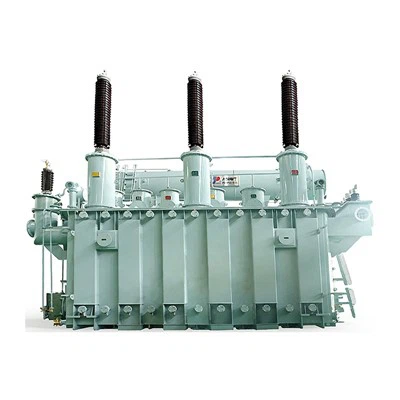
First, let’s start with the basics: what even is a substation transformer, and why does its capacity matter so much? A substation’s job is to step up voltage for long-distance transmission (to cut down on energy loss over miles of power lines) or step it down for distribution to homes, businesses, and factories. The transformer is the heart of that process, so if its capacity is mismatched to the load it’s supposed to serve, you’ve got trouble. Too small, and it overheats during peak demand—think a hot summer evening when everyone turns on their AC, leading to tripped breakers or even permanent damage. Too big, and you’re wasting money on unnecessary up-front costs, plus the transformer runs at inefficient low loads, which adds to operational expenses over its 30 to 40-year lifespan.
Now, the rated capacity itself. In technical terms, it’s the maximum apparent power a transformer can deliver continuously under specified reference conditions, without exceeding the temperature limits set by industry standards. Wait, “apparent power” vs. “real power”? That’s a common point of confusion, so let’s clarify that. Real power (measured in watts, W) is the actual energy that does work—powering a light, running a fridge, a factory’s assembly line. Apparent power (measured in volt-amperes, VA) is the combination of real power and reactive power, the energy that inductive loads (like motors, transformers themselves, and even the wiring in buildings) need to operate. Because reactive power doesn’t do useful work, it’s easy to overlook, but ignoring it leads to picking a transformer that’s too small. That’s why substation transformer rated capacity is always listed in MVA (megavolt-amperes, 1 MVA = 1 million VA), not MW (megawatts)—because it accounts for both real and reactive power.
The reference conditions I mentioned earlier are non-negotiable, too. A transformer’s rated capacity is defined at a standard ambient temperature—usually 20°C (68°F) for outdoor units, or 40°C (104°F) for indoor ones. That’s because temperature directly affects how well the transformer’s insulation works. As the temperature rises, insulation breaks down faster, so you can’t push the same amount of power through a transformer when it’s 100°F (38°C) outside as you can when it’s a mild 70°F (21°C). We always adjust for ambient temperature when sizing a transformer for a project; for example, if a substation is in Phoenix, Arizona, where summer temps regularly hit 110°F (43°C), we recommend a transformer with a slightly higher rated capacity than if the substation is in Seattle, where temperatures rarely exceed 80°F (27°C).
Another key detail: rated capacity accounts for continuous operation, not short-term overloads. Transformers can handle temporary spikes in load—say, when a factory kicks on a heavy piece of machinery for an hour a day—because their windings and cooling systems can handle brief excess power. But rated capacity is for steady, 24/7 operation. That’s why it’s critical to size a transformer not just for the average load, but for the peak load the substation will ever face. If you size it to only handle 80% of peak demand, that 20% spike every afternoon will add up over time, leading to overheating, reduced lifespan, and expensive repairs.
Now, let’s talk about how we, as substation transformer suppliers, determine the right rated capacity for a specific project. This isn’t a one-size-fits-all number. First, we work with the client’s load profile. That means looking at their current demand, projected growth over the next 10 to 15 years (transformers are long-lived assets, so we can’t just size for today), and any future additions—like a new housing development adjacent to the substation, or a commercial complex that’s set to open in two years. We also factor in the type of loads the substation will serve. A substation for a residential neighborhood will have a different load profile than one for a steel mill, which has large, continuous motor loads that draw a lot of reactive power. For industrial loads, we might need to add a buffer to the rated capacity to avoid power factor issues, which can push the apparent power higher than expected.
I remember a project early in my career that taught me just how important this is. We had a client who wanted to save money, so they tried to pick a transformer with a rated capacity just enough to cover their current load, without accounting for future growth. Three years later, they were expanding their industrial park, and their transformer was already maxed out. They had to shut down operations for three days while we installed a new, larger unit, costing them an estimated $200,000 in lost production—way more than the extra cost of sizing correctly in the first place. That’s why we always push for a 10 to 15% growth buffer, even when a client is focused on up-front costs. It’s not just about selling a transformer; it’s about building a solution that works for decades.
Another thing that affects rated capacity is the transformer’s cooling system. Different cooling methods let a transformer handle different amounts of power at the same rated temperature. For example, an ONAN (oil-natural, air-natural) transformer, which uses natural air flow to cool the oil inside the unit, has a standard rated capacity for its cooling mode. If a client needs a higher capacity, we might offer an ONAF (oil-natural, air-forced) design, which uses fans to blow air over the cooling fins, increasing the transformer’s ability to dissipate heat. This means a transformer can have the same physical size, but a higher rated capacity, just by upgrading the cooling system. That’s another balance we strike: making sure the cooling system matches the required rated capacity without overbuilding, which would drive up costs unnecessarily.
There’s also a common misconception that rated capacity is fixed forever. In some cases, yes—for standard transformers built to meet specific specs, the rated capacity is set at the factory. But for custom units, which many substations need (especially in rural or industrial areas with unique load needs), the rated capacity can be adjusted based on the client’s requirements. We can modify the number of winding turns, the size of the cooling system, and the insulation grade to get exactly the rated capacity they need. That’s one of the perks of working with a supplier that offers custom units, instead of just off-the-shelf models. We can tailor the transformer to their grid, not the other way around.
Let’s also touch on industry standards, because rated capacity isn’t just a number we pull out of thin air. We follow standards set by organizations like the Institute of Electrical and Electronics Engineers (IEEE) and the International Electrotechnical Commission (IEC), which define how rated capacity is calculated, tested, and labeled. For example, IEEE C57.12.00 is the standard for general requirements for dry-type and liquid-immersed distribution, power, and regulating transformers, and it specifies the temperature rises and reference conditions used to determine rated capacity. When we test a transformer before it leaves our facility, we run it at its rated capacity for a set period to make sure it doesn’t exceed the temperature limits outlined in these standards. That’s how we ensure that every transformer we supply will perform as advertised, for the full 30 to 40 years we guarantee.
For our clients, understanding rated capacity isn’t just a technical detail—it’s a way to make smarter investment decisions. A transformer is usually one of the most expensive pieces of equipment in a substation, so getting the rated capacity right means avoiding costly replacements, outages, and repairs down the line. We walk every client through the load profile, the growth projections, the cooling options, and the industry standards to make sure they feel confident in the rated capacity we recommend. No jargon, no fine print—just clear, honest advice based on decades of experience.

If you’re planning a substation project, whether it’s a new construction, a retrofit, or a load expansion, don’t leave the rated capacity of your transformer to chance. Working with a supplier who will take the time to understand your unique needs, account for future growth, and ensure the transformer’s rated capacity is aligned with your grid’s demands is the difference between a reliable, long-lasting asset and a recurring headache. Let’s talk through your project: share your load profile, timelines, and any specific requirements, and I’ll help you determine the ideal rated capacity for your substation transformer, along with options to fit your budget. We can walk through specs, answer questions, and make sure you get a transformer that performs as expected, for years to come.
Integrated Transformer References
IEEE Std C57.12.00-2020, IEEE Standard for General Requirements for Liquid-Immersed Distribution, Power, and Regulating Transformers
IEC 60076-1:2021, Power transformers – Part 1: General
NEMA Standards Publication TR-1-2019, Transformers, Power, Distribution, and Regulating, General Requirements
Nantong Yawei New Energy Technology Co., Ltd.
As one of the most professional substation transformer manufacturers and suppliers in China, we’re featured by quality products and good service. Please rest assured to wholesale durable substation transformer made in China here from our factory. Customized orders are welcome.
Address: Room 28-101, Building 27 and 28, No.333 Kaiyuan Avenue, Sunzhuang Subdistrict, Hai’an City, Nantong City, Jiangsu Province, China
E-mail: admin@nantongyawei.com
WebSite: https://www.nantongyawei.com/
