If you’ve ever stepped into a cold storage warehouse—where temperatures hover between -20°C and 5°C to preserve everything from frozen seafood to pharmaceutical ingredients—you’ve probably noticed the quiet, efficient movement of pallets through narrow aisles. For operators in these facilities, material handling isn’t just about moving goods; it’s about reliability, worker safety, and avoiding costly downtime. That’s why I get asked this question constantly: Can manual stackers be used in cold storage? As a supplier of manual stackers for over a decade, I’ve seen firsthand how these tools perform in frigid environments, and the answer isn’t a simple yes or no—it’s about matching the right stacker to the unique challenges of cold storage. Manual Stackers
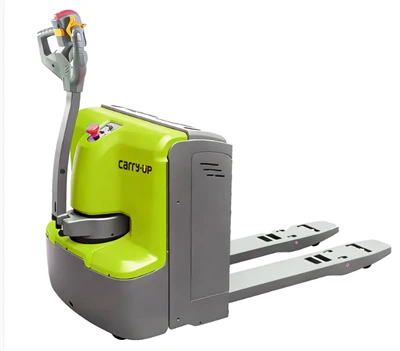
Let’s start with the core truth about cold storage conditions: they’re brutal on materials. Regular manual stackers, the ones you might see in a standard retail stockroom, are built to operate in temperatures between 10°C and 40°C. Their steel frames, hydraulics, and moving parts rely on lubricants, seals, and components designed for mild climates. When you drop that stacker into a -18°C freezer, those standard parts start to fail. The hydraulic fluid thickens to a sludge, making it impossible to pump loads; plastic seals crack and leak; and even the steel itself can become brittle over time with repeated temperature swings. So if you grab a generic manual stacker off a shelf and drag it into a cold storage unit, you’ll be lucky if it lasts a week before it needs repairs. But that doesn’t mean all manual stackers are out of the running. The key is choosing cold-storage-rated units, engineered specifically to withstand those extreme temperatures.
I first learned this lesson early in my career. A small frozen food distributor came to me in 2012, desperate because their old manual stackers had died mid-shift in their -22°C freezer. They’d tried three different off-the-shelf models, each lasting less than two weeks. The team was paying overtime to move pallets by hand, and they were risking worker injuries from lifting heavy frozen cargo. We worked with our engineering team to modify a core manual stacker design: we swapped the standard hydraulic fluid for a low-temperature hydraulic fluid, a synthetic blend that stays viscous even at -40°C. We replaced the rubber seals with nitrile, a material that doesn’t crack or harden in freezing temps, and coated the steel frame with a corrosion-resistant, cold-weather epoxy to prevent rust from condensation (which is rampant in cold storage, even indoors). We also added rubberized grips on the handles, but not just any rubber—cryogenic-grade rubber that doesn’t turn brittle when operators are handling it in subzero air. That modified stacker worked for them for seven years, until they upgraded to powered equipment, and they still call to ask for recommendations for other cold storage clients.
Of course, it’s not just about the stacker’s build—it’s about how you use it in cold storage. Even the best-rated manual stackers will fail if you don’t adapt your operating habits. Let’s talk about load capacity first. Regular manual stackers are often rated for 2,200 to 4,400 pounds, but in cold storage, that capacity drops by roughly 15% for manual units. Why? The hydraulic system’s efficiency is reduced in low temperatures, so pumping a 4,400-pound load in -18°C requires far more force than it does at room temperature. Pushing that limit will wear out the hydraulic pump faster and can lead to operator fatigue, which increases the risk of accidents. I always advise cold storage operators to stick to 85% of the stacker’s rated capacity. That small adjustment prevents unnecessary strain on the machine and keeps workers safe.
Then there’s temperature cycling, a common, often overlooked challenge in cold storage. Many facilities alternate between loading docks (which sit at room temperature, around 15°C) and deep freezers (-20°C or lower). Every time you move a manual stacker from a warm loading area into a freezer, condensation forms on its parts. If you don’t let the stacker acclimate for 15 to 20 minutes before operating it, that moisture can freeze in the hydraulic lines, jamming them, or corrode steel components from the inside out. I’ve seen operators skip that step, eager to keep their shift moving, and end up with a stacker that won’t lift a pallet after a week. It’s a small habit, but it’s one that extends the life of a cold storage manual stacker by years.
Another point: manual stackers are often preferred in cold storage for reasons that go beyond just cost. Unlike powered stackers, which run on batteries that drain fast in cold temperatures (some lithium-ion batteries lose up to 30% of their capacity in -20°C), manual stackers have no batteries. There’s no risk of a dead battery mid-shift, no need to bring spare battery packs into cold areas (which can sweat and damage electrical components), and no charging stations that take up valuable floor space. For small to mid-sized cold storage facilities, where space is tight and operating budgets are lean, manual stackers are a practical choice. I recently worked with a craft ice cream manufacturer that has a 1,200-square-foot cold storage unit; they couldn’t justify the cost of a powered stacker, and their aisles are too narrow for larger equipment. They now use three of our cold-rated manual stackers, and they tell me they haven’t had a single maintenance issue in two years. That’s the kind of win that makes this work worth it.
Of course, there are limitations. If you’re operating in temperatures below -30°C, even the most specialized manual stackers will face challenges. The low-temperature hydraulic fluid thickens to the point where manual pumping requires extreme force, and even cryogenic materials start to lose their flexibility. In those cases, powered cold-storage-rated equipment is a better fit. But for most standard cold storage facilities—temperatures between -18°C and 5°C, and average pallet loads under 3,700 pounds—manual stackers are a reliable, cost-effective option.
I also want to address a common misconception: that manual stackers are slower than powered ones in cold storage. In reality, for tasks like loading and unloading pallets from dock doors, or moving pallets in narrow aisles, manual stackers can be just as fast as powered models. There’s no waiting for a battery to charge, no need to maneuver a large piece of equipment through tight spaces, and operators don’t have to worry about power cords getting stuck on pallet edges. The difference comes down to training. A well-trained operator can move a pallet in 10 seconds with a manual stacker, while a new operator might take 15 to 20 minutes to troubleshoot a faulty powered stacker. That’s a big difference in a facility where every minute of downtime adds up to lost revenue.
After 12 years in this business, I’ve learned that the best material handling solutions aren’t always the newest or most expensive ones—they’re the ones tailored to the space you’re working in. For cold storage facilities, manual stackers can absolutely work, if you choose the right model and operate it correctly. If you’re currently dealing with faulty equipment, high maintenance costs, or worker injuries in your cold storage unit, don’t settle for generic solutions. Reach out to our team to discuss your specific needs. We’ll help you select the right cold-rated manual stacker, offer training on proper operation in low temperatures, and provide ongoing support to keep your operations running smoothly.
Electric Pallet Truck References
- Material Handling Industry of America. (2021). Cold Storage Material Handling Equipment Specifications. MHIA Press.
- National Frozen & Refrigerated Foods Association. (2020). Worker Safety in Extreme Temperature Warehouses. NFRA Journal.
- Industrial Lubricants Association. (2019). Low-Temperature Hydraulic Fluid Performance Guidelines. ILA Technical Report.
- Occupational Safety and Health Administration. (2018). Material Handling in Cold Storage Facilities. OSHA Safety Bulletin.
Hangzhou Carry Equipment Co., Ltd.
Hangzhou Carry Equipment Co., Ltd. is one of the most professional manual stackers manufacturers and suppliers in China, also supports customized service. Please feel free to buy advanced manual stackers for sale here and get quotation from our factory. For price consultation, contact us.
Address: No.360 Tongxiang Rd., Yinzhou Economic Development Zone, Yinzhou Dist., Ningbo, China
E-mail: Sales@carryupmhe.com
WebSite: https://www.carrymhe.com/
