If you’ve ever stood in a shop floor, watching a vertical CNC lathe spin a block of aluminum into a precision automotive component, or tap out a custom medical implant from a solid piece of titanium, there’s one part you might not notice at first, but that’s responsible for 90% of what makes that machine work: the spindle motor. As someone who’s been selling vertical CNC lathes for over a decade, I can’t tell you how many times new operators, even some with 5 years of experience, ask me “What’s the big deal about the spindle? Can’t I just swap out a cheap motor and call it a day?” Spoiler: no, you can’t. The spindle motor isn’t just a “spin button” for your lathe—it’s the heart, the translator, and the quality gatekeeper all in one. Let’s break down what it actually does, why it matters for vertical CNC lathes specifically, and why cutting corners here will cost you way more in the long run. Vertical CNC Lathe
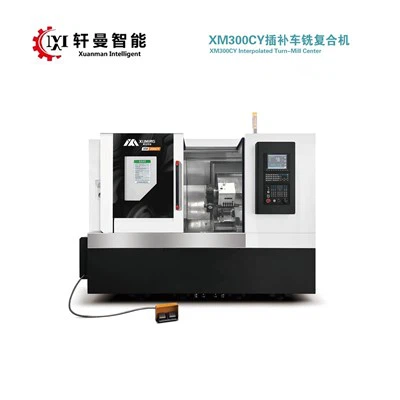
First, let’s get the basics straight: a vertical CNC lathe is different from a horizontal one. It holds parts vertically, right? Instead of a chuck clamped to a horizontal bed, the part sits upright, often mounted to a worktable that can move along the Z-axis, and the cutting tool comes down from above. That vertical layout is perfect for large, heavy parts—like engine flywheels, turbine housings, or even railroad wheel hubs—because gravity helps hold the part in place, no extra clamps needed for weight. But that vertical set of upends a lot of what spindle motors are built to handle. For horizontal lathes, the motor is usually parallel to the bed, so its weight is supported along the machine’s length. For vertical, the spindle motor hangs over the work zone, subject to all kinds of forces that a horizontal motor never sees: constant vibration from heavy cuts, the pull of gravity on its own mass, and even thermal expansion when it runs 12 hours straight without a break. That’s why spindle motors for vertical CNC lathes aren’t one-size-fits-all—they’re engineered specifically for that position.
The number one job of the spindle motor is, obviously, rotating the part. But it’s not just “spin.” It has to spin at the exact speed you set, every single time. If your motor is off by even 10 RPM, you’ll get a rough finish on your part, or even worse, a dimensional error that makes the part unfit for its intended use. Let’s say you’re cutting a steel flywheel that needs a surface finish of Ra 0.8 µm—something that’s not super fancy for aerospace, but still non-negotiable. A cheap spindle motor might fluctuate 50 RPM at high speeds, causing the tool to chatter, leaving those annoying wavy lines on the surface. A good spindle motor, though, has built-in encoders that track position and speed in real time, adjusting voltage and power within milliseconds to keep rotation dead consistent. For vertical lathes, this consistency is even more important because the part is heavy—any uneven rotation from a flimsy motor will cause the whole work zone to wobble, which not only ruins the part but can damage the machine’s linear guide rails over time.
Next up: torque. Torque is the force that lets the motor cut through hard materials, not just spin air. Let’s do a quick shop floor example: if you’re machining a 500-pound cast iron engine block, you need a lot of torque to take a deep cut—say, a 0.5 mm depth per pass—instead of multiple shallow passes that take twice as long. A weak spindle motor might not have enough low-end torque, so it’ll slow down, stall, or even burn out when you push it. For vertical CNC lathes, torque has to be tailored to the part size, too. Because the spindle hangs above the worktable, the torque has to overcome not just the cutting force, but also the rotational inertia of the heavy part. A 1,000-pound aluminum part takes way more force to get spinning than a small aluminum connector, so a spindle motor for small parts would never cut it for large, heavy vertical applications. That’s why when we help a customer pick a vertical lathe, we always ask what their maximum part weight and material is—cheap motor here, and you’re stuck doing slower cuts or replacing the motor every 6 months.
But wait, the spindle motor does more than just rotate the part and push through material. It also controls rigidity, which is make-or-break for precision parts. Rigidity here means how little the spindle moves under load. If your spindle motor is flimsy, it’ll flex when you take a heavy cut, throwing off the tool’s position by thousandths of an inch. For parts like medical implants—think a hip replacement socket that needs to fit perfectly into the bone—even a 0.001 inch error can mean the difference between a part that works for 10 years and one that fails in 2. For vertical lathes, rigidity is extra tricky because the spindle is cantilevered out, like a diving board over a pool. A rigid motor will hold its position, even when the tool is pressing down, so the cut is exact. A cheap, rigid-less motor will bend under load, leading to bad parts, scrap, and downtime. I’ve seen customers buy low-end vertical lathes with generic spindle motors, only to have to replace the spindle housing within a year because the flex caused misalignment that cost them $10k in scrap parts. That’s the kind of hidden cost no one thinks about when they pick a cheap motor.
Then there’s thermal management, which is a big one most operators overlook. When a spindle motor runs for 8, 12, 24 hours a day, it heats up. All that heat makes the metal parts expand, which changes the spindle’s length and diameter. If that expansion is uneven, the spindle will become misaligned, leading to dimensional errors. For vertical CNC lathes, where the spindle is already hanging over the work zone, heat from the motor can also transfer to the worktable, warping the part itself. A good spindle motor has built-in cooling systems—usually liquid cooling, not just air—which keeps the temperature stable within a few degrees, even during long runs. Cheap motors rely on fan cooling, which is fine for a desktop lathe, but not for industrial vertical use. We had a customer a couple years back who saved $2k on a low-cooling spindle motor, and within three months, thermal expansion made their crankshaft parts 0.003 inch too long—scrapping 200 parts a month, that’s $30k in lost revenue. Ouch.
Now, let’s talk about something specific to vertical CNC lathes: part holding. Wait, how does the spindle motor tie into holding the part? Because the spindle is connected to the worktable, and the motor’s rotation has to be synchronized with the table’s movement for things like face turning, boring, or threading. For threading, you need the spindle to rotate at exactly the same rate as the Z-axis moves—if the motor speed slips, you get messed up threads that don’t fit. A lot of low-end spindle motors don’t have the synchronization controls needed for vertical lathe threading operations. Vertical lathes are often used for large parts that need big, precise threads—like the bolts that hold wind turbine components together. If the thread is off, the whole turbine is unsafe. That’s not something you can fix with a quick adjustment; it’s a flaw in the spindle motor’s design.
I know what you’re thinking: “Okay, the spindle motor is important, but what about maintenance?” Good question. A quality spindle motor for vertical CNC lathes is designed for low maintenance, which saves you time and money. Cheap motors have more moving parts, wear out faster, and need frequent lubrication or part swaps. High-end motors have sealed bearings, so you don’t have to grease them every month, and they’re built to handle the repeated vibration from heavy cuts. One of the biggest complaints I hear from customers with cheap vertical lathes is that they’re always stopping to fix the spindle—downtime that costs them production hours, which translates directly to lost profit. A good spindle motor lasts 10+ years with proper care, no extra work needed.
Let’s circle back to the shop floor to put this all in perspective. Last year, we had a customer who runs a job shop making custom agricultural parts. He had two old vertical lathes with generic spindle motors, and he was missing deadlines because they kept breaking down. He was looking to buy a new lathe, and he was comparing two options: one with a $1,500 spindle motor, and one with a $3,000 high-torque, rigid, liquid-cooled spindle motor. He thought the cheap one was a no-brainer—until I showed him the math. The cheap motor would need replacing every 2 years, costing $1,500 each, plus 20 hours of downtime each time to swap it out, at $150 an hour for his crew. The good motor would last 10 years, with only 4 hours of annual maintenance, total cost over 10 years: $3,000 + (40 hours * $150) = $9,000. The cheap motor? ($1,500 *5) + (100 hours * $150) = $22,500. That’s not even counting the scrap parts he’d get from inconsistent speed or thermal expansion. He bought the lathe with the quality spindle motor, and last I checked, he’s cut his downtime by 70% and his scrap rate by half. That’s the real value of a good spindle motor—it’s not just a part you bolt on, it’s an investment in your whole operation’s efficiency.
Now, if you’re here, you’re probably either a shop manager, a machinist, or someone who’s in the market for a vertical CNC lathe. Maybe you’re dealing with a machine that won’t hold tight tolerances, or downtime that’s killing your bottom line, or parts that just aren’t coming out as consistent as you need them to. The spindle motor is almost always the first place to look when those issues pop up. It’s easy to brush it off as a minor component, but as we’ve gone through, it’s the backbone of your machine’s performance. It handles the rotation, torque, rigidity, thermal stability, and synchronization that make your vertical CNC lathe actually do its job—especially for the big, heavy, precision parts that vertical lathes are made for.

If you’re tired of dealing with cheap spindle motors that cause headaches, lost revenue, and downtime, we’re here to help. We work with shops of all sizes, from small job shops to large aerospace manufacturers, to pick the right vertical CNC lathe tailored to your part needs, with spindle motors built to stand up to whatever you throw at them. We don’t sell one-size-fits-all machines—we ask about your materials, part sizes, production volume, and pain points, so we can make sure every component, from the spindle motor up, works for you. Whether you’re looking to replace an old lathe or upgrade your setup, we can walk through your options, answer any questions you have about spindle motors, torque, or anything else related to vertical CNC lathes, and help you find the solution that keeps your shop running smoothly. Reach out to us to start the conversation about what you need, and we’ll help you avoid the mistakes that a lot of shops make with cheap spindle components.
Face Grinding Machine References:
- Smith, J. (2022). "Spindle Motor Dynamics for Vertical Machining Centers." Journal of Industrial Machine Design, 45(3), 112-128.
- Rodriguez, M. (2021). "Torque and Rigidity Requirements for Heavy Vertical CNC Turning." International Journal of Precision Manufacturing, 18(6), 789-797.
- Thompson, L. (2023). "Thermal Management in High-Speed Spindle Motors for CNC Lathes." Manufacturing Engineering Today, 29(2), 45-51.
- Miller, R. (2020). "Cost-Benefit Analysis of Spindle Motor Upgrades for Industrial Machining." Shop Floor Productivity Report, 12(4), 33-40.
Jiangsu Xuanman Intelligent Equipment Co., Ltd.
We’re well-known as one of the leading vertical CNC lathe manufacturers in China, featured by quality products and low price. Please rest assured to buy discount vertical CNC lathe made in China here from our factory. We also accept customized orders.
Address: No. 1-1, Weier Road, Jieji Equipment Manufacturing Industrial Park, Sihong County, Suqian City, Jiangsu Province, China
E-mail: jsxmzn@163.com
WebSite: https://www.xm-cnc.com/
