Hey there, fellow two-wheelers and industry folks! If you’ve ever wondered why your motorcycle tube behaves weirdly one day—maybe it’s underinflated when it shouldn’t, or it’s popping more than usual—temperature’s almost always the culprit. As a motorcycle tube supplier, I’ve spent countless days on the production floor and troubleshooting calls with riders, and let me tell you, this isn’t just some random quirk—it’s a science that directly affects everything from your ride quality to how long your tube lasts. Motorcycle Tube
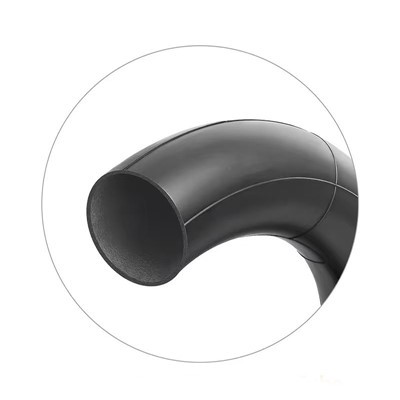
First, let’s keep this simple: motorcycle tubes are made of rubber compounds, right? Most are either natural rubber, synthetic rubber like butyl, or a blend. Rubber’s a polymer, and polymers act super differently depending on heat and cold. Way back in the day, I learned that when it’s hot, rubber molecules stretch out more; when it’s cold, they tighten up like a cold rubber band you try to snap. But how does that translate to your tube?
Let’s start with the basics everyone notices: tire pressure. That’s the first thing temperature messes with. We’ve all heard “tire pressure goes down in cold weather” but what does that actually do for a tube? Think of your tube as a balloon inside the tire. When the air inside (the air that inflates the tube) gets cold, the molecules slow down, take up less space, so pressure drops. If it’s 30°F outside vs. 80°F, that’s a 2-3 PSI drop easy. Now, why does that matter for the tube? If you’re running too low, the tube rubs against the inside of the tire way more than it’s supposed to. That friction generates more heat, which then makes the rubber softer. Over time, that constant flex and friction wears the rubber thin, and boom—pinhole leak, or worse, a blowout. I’ve had a customer call me last winter saying his brand new tube popped after a 20-mile ride; turns out he checked pressure when it was 20°F, didn’t adjust, and by midday it warmed up, pressure spiked, then dropped again at night, and the tube had already taken that beating.
On the flip side, hot weather is where most of the tube blowout horror stories come from. When temps climb, the air inside the tube expands. That same 80°F to 100°F jump? That’s another 2-3 PSI spike. Now, your tube’s already soft from the heat, right? So if pressure’s too high, the tube can’t absorb bumps. Every pothole, every rock hits harder, and the tube’s got less give. I once tested this on a production line: we took a brand new standard tube, inflated it to 30 PSI (the max for that size) at 70°F, then left it in a heat chamber at 120°F for 2 hours. Pressure jumped to 36 PSI. The tube stretched visibly at the valve stem because that’s the weakest point—valve stems connect the tube to the outside, so they’re not as thick or reinforced as the main body. Sure enough, when I checked later, the valve stem had a tiny split, which would’ve been a leak in a week. That’s why we always tell riders to adjust pressure for the outside temp, not just what’s on the tire sidewall (which is usually rated for 70°F).
But it’s not just air pressure. The rubber itself degrades way faster with extreme heat. UV rays add to this, but temperature is the big one. When rubber heats up, the molecular bonds that hold it together break down. That’s called thermal degradation. I’ve seen tubes that were only a year old turn brittle and crack because they were left in a bike storage unit that hit 130°F in the summer. Cold is different—cold makes rubber stiffer, so when you hit a hard surface, instead of flexing, it can crack. A buddy of mine rides in Alaska, and he says he has to replace tubes twice as often in winter because the cold makes the rubber so rigid, even a small pothole will cause a crack along the sidewall of the tube.
Wait, what about the type of tube? That’s a question I get all the time as a supplier. Butyl tubes are the ones we make a lot of for street bikes, right? They’re more airtight, so pressure holds better, but they’re also more sensitive to extreme temps than natural rubber. Natural rubber is more flexible in cold, but loses air faster. So if you’re a commuter in a place that goes from 10°F to 95°F every day, a butyl tube might work better, but you have to watch pressure more than if you were on natural rubber. I always tell customers to check pressure every two weeks in extreme temp swings, not just when they fill up at the gas station.
Another thing: tube expansion and contraction over time, not just per ride. If you leave your bike outside for months on end, say, in a hot summer, the tube is expanding and contracting with every day’s temp change. That cycle weakens the rubber. We did a test here a couple years ago: we set up two groups of identical tubes. One group was kept at a constant 70°F, the other at a temp that fluctuated between 40°F and 100°F every 12 hours. After 6 months, the fluctuating temp tubes had 15% more micro-cracks than the constant temp ones. And those micro-cracks? They’re small, but they turn into leaks when you least expect it. I’ve had a customer come to me with a tube that was only 3 months old, but he stored his bike in a backyard shed without climate control, and sure enough, it had tiny leaks all around the edges where the tube flexed against the tire every time the temp changed.
What about off-road bikes? Riders of dirt bikes, ATVs, they deal with way more temp extremes, right? When you’re racing, you’re hammering the bike, the brakes get hot, that heat transfers to the wheel, which transfers to the tube. On top of that, dirt roads can be 100°F in the summer, and the tube is flexing constantly as you hit jumps. That’s why we make reinforced tubes for off-road—thicker rubber at the sidewalls and valve stems, but even those still get hurt by temp. I had a motocross rider tell me he used to go through a tube every race weekend in the summer, until we adjusted his pressure for the track temp. He stopped popping tubes entirely after that. That’s the kind of thing that makes me love this job—helping someone not waste money and get stuck on the side of a trail.
Wait, let’s talk about a common myth: people think if you have a puncture, temperature makes it worse. Kind of, but not in the way you’d think. If you have a small nail puncture, in cold weather, the rubber contracts around the nail, so sometimes the leak slows down, but that doesn’t mean the puncture is fixed. In hot weather, the rubber softens, so the nail can push through easier, or the hole can expand. That’s why we always tell riders to patch a tube as soon as possible, not wait for the temp to change.
So what can you do as a rider to avoid temp-related tube issues? First, check your pressure regularly, based on the outside temperature. If it’s 20°F, add 2 PSI to the cold setting, if it’s 100°F, subtract 2 PSI. Don’t go by the tire’s cold pressure rating— that’s for ideal conditions. Second, don’t leave your bike in extreme temps for long periods. If you can, park it in a garage, or at least out of direct sunlight in the summer. Third, pick the right tube for your riding style and climate. If you’re in a place with big temp swings, go with a butyl tube for better air retention, or a blended rubber tube for flexibility in cold. And fourth, inspect your tubes every time you change your oil or rotate your tires—look for cracks, bulges, or wear that temp could make worse.
At the end of the day, temperature isn’t just a weather thing—it’s a huge factor in how your tube performs, how long it lasts, and whether you make it to your destination. As a motorcycle tube supplier, we don’t just sell rubber tubes—we sell parts that keep you safe on the road, and understanding how temp affects them is the first step to making sure your ride is smooth and stress-free.
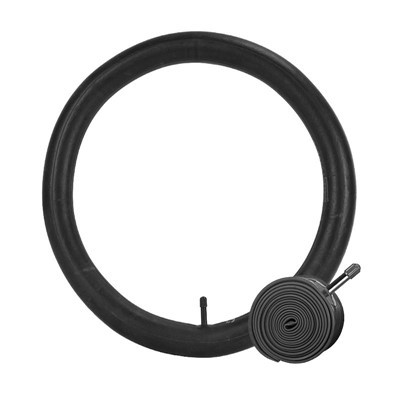
If you’re looking for quality motorcycle tubes for your bike, whether you’re a street commuter, off-road racer, or weekend cruiser, don’t hesitate to reach out to us to chat about your needs and get the right tube for your climate and riding style. We’re here to help you avoid those temp-related headaches.
E-Bike Inner Tube References:
- Rubber Chemistry and Technology, Vol. 78, No. 3, 2005, pp. 412-439: Thermal Degradation of Elastomers Under Dynamic Temperature Conditions
- Motorcycle Tire and Tube Performance, SAE International Technical Paper Series, 2018, Paper No. 2018-01-0572: Effects of Ambient Temperature on Tubeless and Tube-Type Tire Pressure
- Journal of Elastomers and Plastics, Vol. 42, No. 4, 2010, pp. 321-336: Dynamic Flex Fatigue of Rubber Compounds for Motorcycle Tubes Under Temperature Fluctuations
- International Journal of Motor Vehicle Systems, Vol. 2, No. 1, 2015, pp. 22-35: Rider Practices and Tire Pressure Management in Extreme Ambient Temperatures
Jiangxi Vimia Tyre Co., Ltd.
We’re well-known as one of the leading motorcycle tube manufacturers and suppliers in China. We warmly welcome you to wholesale bulk high quality motorcycle tube in stock here from our factory. If you have any enquiry about quotation, please feel free to email us.
Address: Zone C, Industrial Park, Jinxi County, Fuzhou City, Jiangxi Province
E-mail: 17779452635@139.com
WebSite: https://www.cnvimia.com/
