Hey there! I’m a supplier of silicone sealing strips, and today I wanna chat about something super important in our industry: the hardness of silicone sealing strips. Silicone Sealing Strip
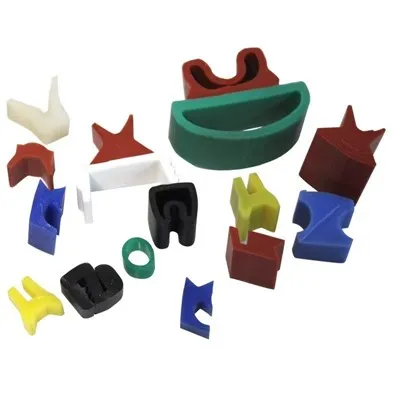
So, what exactly is the hardness of silicone sealing strips? Well, it’s basically a measure of how resistant the silicone is to indentation or deformation. You know, when you press on something and it either gives way easily or stays firm. That’s what hardness is all about in the context of silicone sealing strips.
We usually measure the hardness of silicone using the Shore scale. There are two main types of Shore scales: Shore A and Shore D. For silicone sealing strips, the Shore A scale is the most commonly used. The Shore A scale ranges from 0 to 100, where 0 is super soft, like a squishy gel, and 100 is extremely hard, almost like a rigid plastic.
Now, why does the hardness of silicone sealing strips matter? It matters a whole lot, actually. Different applications require different levels of hardness. For example, if you’re using silicone sealing strips for a door or window seal, you’ll probably want something with a medium hardness. A medium – hardness strip (let’s say around 40 – 60 Shore A) can provide a good balance between flexibility and durability. It can easily conform to the shape of the door or window frame, creating a tight seal to keep out air, water, and dust. But at the same time, it’s not so soft that it gets damaged easily.
On the other hand, if you’re using silicone sealing strips in a high – pressure environment, like in a hydraulic system, you’ll need a harder strip. A strip with a hardness of around 70 – 90 Shore A can withstand the high pressure without deforming. It’ll keep its shape and continue to provide an effective seal, even under tough conditions.
Let’s talk a bit about how the hardness affects the performance of silicone sealing strips. When the silicone is too soft, it might not be able to maintain its shape over time. It could get squeezed out of place or compressed too much, which would lead to a poor seal. For instance, if you have a soft silicone strip in a window seal, it might not be able to keep out the wind and rain as effectively because it can’t hold its position properly.
On the flip side, if the silicone is too hard, it might not be flexible enough to conform to the surface it’s supposed to seal. This can also result in a leaky seal. For example, if you try to use a very hard silicone strip on a slightly uneven door frame, it won’t be able to fill in the gaps, and air and water will be able to get through.
As a supplier, I’ve seen a lot of different requirements from my customers. Some of them are looking for super – soft silicone sealing strips for delicate applications, like in electronics where they need to protect sensitive components from dust and moisture. These soft strips can be as low as 10 – 20 Shore A. They’re really gentle and won’t damage the components.
Other customers need harder strips for heavy – duty applications. For example, in industrial machinery, where there’s a lot of vibration and pressure, a harder silicone strip (80 – 90 Shore A) can do the job. It can resist the wear and tear and keep the machinery running smoothly.
When we’re manufacturing silicone sealing strips, we have to be really careful about controlling the hardness. We use special additives and processing techniques to get the right hardness for each order. It’s not an easy task, but we’ve got a lot of experience in this area.
We start by choosing the right raw materials. Different types of silicone polymers have different inherent hardness levels. We select the ones that are closest to the desired hardness and then make adjustments during the mixing process. We add cross – linking agents and other chemicals to change the structure of the silicone and make it harder or softer as needed.
After the mixing, we use a curing process to set the hardness. The curing temperature and time also play a big role in determining the final hardness of the silicone sealing strips. If we cure the silicone at a higher temperature for a longer time, it’ll generally become harder.
One of the challenges we face as a supplier is making sure that the hardness is consistent across the whole batch of silicone sealing strips. Even a small variation in hardness can affect the performance of the strips. So, we have strict quality control measures in place. We test each batch of strips using a hardness tester to make sure they meet the specified hardness requirements.
Another thing to consider is the environmental factors. Silicone sealing strips can be affected by temperature, humidity, and chemicals. For example, at high temperatures, the silicone might become softer, and at low temperatures, it might become harder. This is something we take into account when we’re recommending the right hardness for a particular application.
If you’re in a hot climate and need a silicone sealing strip for an outdoor application, we might recommend a slightly harder strip to compensate for the softening effect of the heat. Similarly, if you’re in a cold climate, a slightly softer strip might be a better choice to prevent it from becoming too brittle.
Chemicals can also have an impact on the hardness of silicone sealing strips. Some chemicals can react with the silicone and change its properties. For example, certain solvents can make the silicone swell or become softer. So, if you’re using the strips in an environment where they’ll be exposed to chemicals, we’ll need to choose a silicone formulation that’s resistant to those chemicals.
Now, I know you might be wondering how you can choose the right hardness of silicone sealing strips for your needs. Well, it all depends on your specific application. Think about the conditions the strips will be exposed to, like temperature, pressure, and chemicals. Also, consider the surface they’ll be sealing. If it’s a smooth surface, you might be able to get away with a harder strip. But if it’s an uneven surface, a softer strip will be better.
If you’re not sure, don’t hesitate to reach out to us. We’ve got a team of experts who can help you figure out the best hardness for your application. We can also provide samples so you can test them out and see how they perform in your specific situation.
In conclusion, the hardness of silicone sealing strips is a crucial factor that can greatly affect their performance. Whether you need a soft strip for a delicate application or a hard strip for a heavy – duty job, we’ve got you covered. We’re committed to providing high – quality silicone sealing strips with the right hardness for your needs.
If you’re interested in purchasing silicone sealing strips or want to have a chat about your requirements, just drop us a line. We’d love to work with you and help you find the perfect solution for your sealing needs.
Silicone Baby Tableware References:
- Silicone Rubber Handbook: Properties, Processing, and Applications
- ASTM Standards for Rubber Hardness Testing
Dongguan Hengyue New Material Technology Co., Ltd.
As one of the most professional silicone sealing strip manufacturers and suppliers in China, we also support customized service. We warmly welcome you to wholesale bulk cheap silicone sealing strip from our factory. If you have any enquiry about quotation and free sample, please feel free to email us.
Address: Building 2, No. 3, Yindou Third Road, Qingxi Town, Dongguan City, Guangdong Province
E-mail: dghengyue@126.com
WebSite: https://www.hengyuesilicone.com/
