If you’ve ever walked past an industrial distillation unit at a refinery, petrochemical plant, or ethanol processing facility, you might’ve noticed a faint, acrid odor hanging in the air, or the occasional telltale rust stain dripping from a column’s steel shell. For me, that’s not just a side effect of manufacturing—it’s corrosion, the quiet, costly enemy that haunts every distillation column I and my team help build, service, and upgrade. Distillation Column

I’ve been a distillation column supplier for 18 years now, and I’ve seen firsthand how corrosion can turn a $2 million custom-built column into a $500,000 repair job, or worse, force a full plant shutdown that costs operators tens of thousands of dollars an hour. The first time I really grasped its impact was in 2012, when a Midwest ethanol plant called us at 2 a.m. to fix a corroded distillation tray that had collapsed mid-run. They’d spent six months designing and fine-tuning their process to boost ethanol yield, only to have corrosion eat through the tray supports, dumping product into the sump and costing them 12 days of production. That day, I stopped thinking of corrosion as just a metallurgy problem and started seeing it as the single biggest threat to a distillation column’s performance, safety, and lifespan.
So, what exactly is corrosion in a distillation column? At its core, it’s the gradual degradation of the column’s metal components—shells, trays, packing, piping, supports—when they interact with the chemicals and operating conditions they’re exposed to during distillation. Unlike general rust you see on a garden tool, distillation column corrosion is a targeted, often silent process that depends entirely on the mix of feedstock, temperature, pressure, and even the tiny amounts of contaminants in the process stream. And because distillation columns work by separating volatile liquids into components using heat and vapor-liquid contact, those same forces that drive separation create perfect conditions for corrosion to take hold.
Let’s break down the most common types you’ll see in these units, because not all corrosion acts the same way, and understanding that is half the battle to stopping it. The first, and most widespread, is acid corrosion. This pops up whenever the distillate or bottoms stream has acidic components—think carboxylic acids in ethanol fermentation, sulfuric acid derivatives in crude oil refining, or even hydrochloric acid that forms when residual chlorine in feedstock reacts with water. For example, in a crude oil distillation unit, as the feed is heated to hundreds of degrees, organic sulfur compounds break down into hydrogen sulfide (H₂S), which then reacts with water vapor in the column to form sulfuric acid, eating away at carbon steel trays and shell. I’ve seen carbon steel columns corrode at a rate of 3 millimeters a year in acidic streams—that’s enough to eat through a 10-millimeter thick tray in just three and a half years.
Then there’s pitting corrosion, a far more insidious type that’s hard to detect until it’s too late. Pitting is when tiny, localized holes form in the metal’s surface, usually around crevices or scratches, because the metal’s passive protective layer (the thin oxide coating that’s supposed to keep corrosion out) breaks down in specific conditions. In distillation columns, pitting often happens on tray valves or packing surfaces, where stagnant liquid can trap contaminants like chloride ions. I had a client in the pharmaceutical industry a few years back who thought their stainless steel packing was fine during routine inspections, only to find 12 small pits in the packing surface, each deep enough to leak product. They’d delayed repacking for six months, and that delay almost caused a cross-contamination event that would’ve shut down their entire production line for months.
Another common culprit is erosion-corrosion, which is when the metal is damaged by both chemical corrosion and physical force at the same time. If you’ve ever had a sandblaster wear through a metal plate, that’s similar—except in a distillation column, the “sand” is tiny, abrasive particles like catalyst fines, salt crystals, or even solidified product residue, carried by vapor or liquid moving at high speeds. This is especially bad in the downcomers of trays, where liquid flows downward at high velocity, or at the inlet of a reboiler, where hot vapor surges into the column. Erosion-corrosion can cut a column’s lifespan by half, even if the metal is rated for the process conditions on paper.
Wait, but how does corrosion actually take place inside a distillation column, step by step? Let’s walk through a typical tray-based ethanol distillation column to make it concrete. The feed here is a fermented mash of corn, water, and ethanol, plus tiny amounts of lactic acid, acetic acid, and residual yeast. The column has 40 trays, heated at the bottom by a reboiler to vaporize the ethanol, which rises up through the trays, while heavier water and solids flow down. At the top of the column, the vapor is condensed into nearly pure ethanol. Now, here’s where corrosion starts: as the vapor rises through the trays, it cools, and some of the water vapor condenses into a thin film on the tray surfaces. That film mixes with the acetic and lactic acids from the feed, creating a weak acid solution that sits on the metal tray. Carbon steel, the most common material for low-cost distillation components, reacts with that acid: the iron in the steel combines with oxygen in the water and acid to form iron oxide (rust) and iron salts, which wash away, leaving more metal exposed to react. Over time, this eats through the tray’s supports, and the holes get big enough that vapor doesn’t flow evenly, reducing separation efficiency.
But it’s not just the trays—corrosion hits every part of the column. The shell, for example, is usually made of thicker carbon steel, but if the insulation around it gets wet from leaks, the moisture traps acidic condensate, causing external corrosion that’s just as bad as internal. The reboiler tubes, which are exposed to hot, high-pressure process fluid, often suffer from caustic corrosion if the process uses sodium hydroxide to adjust pH—too much caustic can cause “caustic cracking,” where the metal becomes brittle and cracks, even if the corrosion rate seems low on surface inspections.
The big mistake I see operators make is treating corrosion as an inevitable cost of doing business, something they just budget for every few years. Let me be clear: corrosion is predictable, and it’s often preventable. As a supplier, we work with operators to design columns that don’t just separate chemicals well, but resist corrosion from day one. For example, instead of plain carbon steel for columns processing acidic ethanol, we use 316L stainless steel, which has chromium and molybdenum that forms a much stronger passive layer against acids and chloride ions. For columns handling high-velocity streams prone to erosion-corrosion, we line the most vulnerable parts (like downcomer inlets) with Hastelloy, a nickel alloy that’s far more resistant to abrasion and chemical attack than steel. We also add small design tweaks—like increasing tray spacing to reduce liquid velocity, or installing pH control systems that adjust the feed’s acidity to a safe level before it enters the column—to cut corrosion rates by up to 70%, in some cases extending a column’s lifespan from 10 years to 25.
Even for existing columns that are already showing early signs of corrosion, there are solutions that don’t require a full replacement. Last year, we helped a refinery client whose 15-year-old crude distillation column had started leaking through pitted shell sections. Instead of cutting out the old steel and installing a new shell, we applied a composite corrosion-resistant coating to the inner walls, and replaced the corroded trays with lightweight, high-density plastic packing that’s immune to acidic corrosion. The job took two weeks of planned downtime, cost a third of a full replacement, and the column has run without corrosion issues for 18 months now. That’s the kind of practical, cost-saving solution that my team lives for—solving a problem that too many people write off as just part of the process.
I also want to address a common misconception: corrosion doesn’t just affect old columns. Even brand new columns can corrode prematurely if they’re not properly engineered for their specific feedstock. I once had a client order a distillation column for fruit juice ethanol, a relatively low-acid process, using standard 304 stainless steel. Six months after startup, the column started showing signs of pitting—turns out, the fruit feed had small amounts of chloride from the processing water, which 304 stainless can’t resist. We replaced the vulnerable parts with 316L, and added a pre-treatment filter to remove chloride contaminants, and that fixed the issue. The key here is that corrosion is not one-size-fits-all—what works for a crude oil column won’t work for a pharmaceutical ethanol column, and rushing the design process to save a few dollars upfront will cost you way more in the long run.
So, what can you do right now to protect your distillation column? First, start with regular, non-destructive inspections—using ultrasonic testing to measure wall thickness, or eddy current testing to spot hidden pitting—way before you see leaks or reduced performance. Most operators only inspect their columns during annual shutdowns, but we recommend quarterly spot checks on the most vulnerable parts (tray valves, downcomers, reboiler inlets) to catch corrosion early. Second, work with a supplier that understands both distillation process design and corrosion metallurgy—someone who won’t just sell you a pre-built column that’s generic, but will tailor it to your specific feedstock, operating conditions, and long-term goals. Third, don’t cut corners on materials. I know it’s tempting to go with the cheapest steel, but a $10,000 upgrade to a corrosion-resistant alloy or coating will save you hundreds of thousands in downtime and repairs.
At the end of the day, distillation is the backbone of so many industries—from fuel and chemicals to food and pharmaceuticals. A distillation column that runs reliably, safely, and efficiently isn’t just a piece of equipment; it’s the heart of your operation. Corrosion doesn’t have to be a death sentence for that heart. It’s a solvable problem, one that starts with understanding what it is, how it acts, and how to design and maintain your column to resist it.
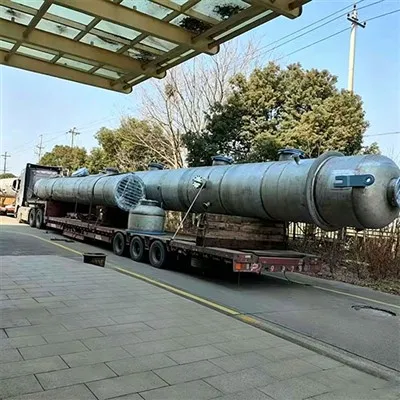
If you’re dealing with corrosion in your distillation column, or you’re planning a new build and want to avoid these headaches down the line, my team and I are here to help. We don’t just supply columns—we provide custom solutions tailored to your process, with years of hands-on experience solving corrosion-related issues for plants across industries. Reach out to discuss your needs, and we’ll walk through how to protect your column, extend its lifespan, and keep your operation running smoothly.
PMMA Exhaust Gas Treatment Equipment References
Shreir, L. L., Jarman, R. A., & Burstein, G. T. (1994). Corrosion: Volume 3: Metal/Environment Reactions. Butterworth-Heinemann.
Marsh, K. N., & Reidel, G. (2015). Distillation: Principles and Practice. Elsevier.
Fontana, M. G. (1986). Corrosion Engineering (3rd ed.). McGraw-Hill.
Wuxi Quansheng Industrial Equipment Co., Ltd.
As one of the most professional distillation column manufacturers and suppliers in China, we have world-leading production equipment and strong manufacturing capabilities. Welcome to buy high quality distillation column for sale here from our factory. For price consultation, contact us.
Address: No.10, Fulaiqiao Road, Hudai Town, Binhu District, Wuxi City, Jiangsu Province, China
E-mail: 397293586@qq.com
WebSite: https://www.pmmatech.com/
