Hey everyone, thanks for stopping by my corner of the web. I’m Jake, and I’ve been selling chlorine dioxide analyzers for almost 10 years now—think everything from small units for local water treatment plants to big, industrial setups for food and beverage facilities. When customers reach out, most already know chlorine dioxide is a rockstar for disinfection: it’s gentler than chlorine, works way better at killing biofilms, and doesn’t leave that weird, strong chemical smell (or the dreaded trihalomethanes) in finished water. But here’s the thing I’ve learned over the years—everyone’s so hyped about how great these analyzers are, no one talks about the downsides. Until today. Chlorine Dioxide Analyzer

I’m gonna break down the real disadvantages of chlorine dioxide analyzers, not just the corporate PR fluff. I’ve seen these issues firsthand, fixed them for customers, and even had to swap out a few units when they weren’t a good fit. Let’s start with the big one: maintenance headaches. Wait, before you roll your eyes, I’m not talking about “wipe the screen once a month” maintenance. I’m talking about actual, hands-on work that not every facility’s tech team is trained for. Most chlorine dioxide analyzers work by measuring either residual ClO2, or the process of how it’s generated (since you can’t just pour it straight into a pipe—you make it on-site from two chemicals, usually sodium chlorite and acid). The sensors? They’re not indestructible. Some of the cheaper units use amperometric sensors, which need to be calibrated every week if you’re running harsh water. Harsh here means high levels of suspended solids, or extra chemicals like ammonia that mess with the sensor’s membrane. I had a customer at a brewery a couple years back—they use ClO2 to sanitize their brewing lines, and the water coming in has a lot of yeast sediment. Their first unit was a cheap no-name brand that needed membrane replacements every 10 days. That’s like, four hours of work a week for their part-time maintenance guy. He was ready to pitch it in the trash until we swapped him for a model with a membrane that’s coated to resist biofouling.
Then there’s reagent handling, which is a whole other can of worms. Wait, chlorine dioxide generators require reagents, right? Some analyzers are lab-based, which means you’ve got to mix your own reagents on-site—pipettes, beakers, keeping temperatures just right, not cross-contaminating samples. A water treatment plant in Ohio told me last year their intern would mess up the reagent ratio every other week, leading to bad readings. That’s a big deal because if your analyzer says you have 0.5 ppm ClO2, but you actually have 2 ppm, you’re over-disinfecting, wasting chemicals, and possibly hurting the ecosystem when you discharge. Under-disinfect, and you’ve got pathogens in your water. Even the inline, reagent-free analyzers—wait, don’t get me started on those. I’ve heard way too many horror stories where a reagent-free unit’s optical sensor gets gunked up with oil or grease from process water, and suddenly it’s reading 0 ppm when there’s actually enough ClO2 to kill everything. I once got a frantic call from a food processing plant that uses ClO2 to clean their produce—their inline analyzer had failed, so they thought their wash water was sterile. Turns out the sensor was covered in apple pulp, and they had to dump 300 gallons of bad wash water. That’s a $10k mistake, all because the sensor wasn’t maintained properly.
Next up, cost. A lot of customers think, “Oh, chlorine dioxide is cheaper than chlorine, so the analyzer will pay for itself.” Not so fast. Let’s do the math: a basic inline ClO2 analyzer is like $3,000, but a top-of-the-line, fouling-resistant one? That’s $8,000. Then add calibration fluids, membranes, replacement sensors—those are $500 a pop. And if you’re a small facility, like a small town water system with only two techs, or a coffee roaster with one guy who does everything, that’s a huge upfront and ongoing cost. I had a café owner come to me last year—he has a 50-person shop, and he wanted to sanitize his espresso machine lines with ClO2. He saw a cheap analyzer on Amazon for $150. Let me tell you, that unit lasted two weeks before it gave him completely wrong readings, and he almost made a customer sick because he thought his lines were sanitized when they weren’t. Don’t get me wrong, there are affordable options, but you get what you pay for. The cheap units cut corners on sensor quality, and you’ll end up spending more on fixes than if you’d gone for a mid-range model to begin with.
Then there’s specificity issues. Wait, ClO2 analyzers have to tell the difference between actual ClO2 and other chemicals floating around in the water, right? Like, if your water has high levels of chlorine, or chloramines, or even ozone, those can mess up the reading. I had a municipal water customer a few years back that was using both chlorine and ClO2 to treat their reservoir. Their analyzer would read 1 ppm ClO2, but when they sent samples to a third-party lab, it was only 0.2 ppm. Turns out the chlorine was reacting with the sodium chlorite in the ClO2 generator, and the analyzer was picking up the byproduct, not the actual ClO2. That’s a problem. Some newer analyzers use selective electrodes that only measure ClO2, but a lot of older models or cheap ones don’t have that. You have to make sure the analyzer is calibrated for your specific water matrix—like, if you’re dealing with high hardness, or iron, or that produce wash water with lots of organic matter, you need a sensor that’s tuned to ignore those interferences. If you skip that, your readings are garbage.
Another downside? Regulatory hoops. Wait, a lot of facilities—drinking water plants, pharmaceutical manufacturers, food and beverage—have to follow strict EPA or FDA rules for chemical levels. That means your analyzer has to be validated, calibrated, and all your data has to be logged and stored. A lot of basic analyzers don’t have built-in data logging, or they only store data for a few weeks. If an auditor comes in, you better have that data. I had a pharmaceutical customer last year—they make injectable drugs, so their water has to be 100% pure. Their old analyzer didn’t have a secure data log, and during an audit, they couldn’t produce readings for three months. They got a warning, and had to spend $15k upgrading their system just to get compliant. Now, I’m not saying all analyzers are bad, but you have to make sure the model you pick meets the regulatory requirements for your industry. If you’re a small business that doesn’t have a big compliance team, that’s an extra burden you don’t think about until it’s too late.
Wait, and let’s talk about training. Most people think, “An analyzer is a plug-and-play device, right?” No. I’ve had customers who set up their new analyzer, read the quick start guide, and then call me panicking because it’s not working. Setting up a ClO2 analyzer means you have to calibrate it correctly, adjust it for your flow rate, make sure the sample line is the right length, not too long (which can cause ClO2 to degrade before it reaches the sensor) and not too short (which can cause pressure issues). A lot of facilities don’t have someone on staff who knows how to do that. So they either pay me or another tech to come out, which is another $200 an hour, or they leave the analyzer misconfigured and get bad readings. I always tell customers, if you don’t have someone trained to handle this, ask your supplier for on-site training. But not all suppliers offer that. Some just send you the unit and say “good luck.” That’s why I make it a point to include a full day of free training with every unit I sell, and I’m always on call if someone has a problem, no matter how small.
Wait, is there any other downside? Oh, right, ClO2 degradation in the sample line. If the sample line from your process pipe to the analyzer is made of the wrong material, or too long, the ClO2 will break down before it gets to the sensor. A lot of people use plastic lines, which can absorb ClO2. Or they use steel lines, which react with ClO2. I had a wastewater treatment plant that had a sample line made of PVC—after three months, the line had absorbed so much ClO2 that their readings were always 0.3 ppm lower than actual. They had to replace the line with Teflon, which is the only material that doesn’t react with ClO2. That’s an extra $500 for a custom line, which no one budgets for when they first buy the analyzer.
But wait, let’s balance this out. I’m not here to bash ClO2 analyzers—they’re the best tool for the job for most applications. The problem isn’t the analyzers themselves, it’s picking the wrong one, or not planning for the downsides. A lot of the issues I see come from customers going for the cheapest option they can find, without thinking about their specific use case. Like, if you’re a small swimming pool, you don’t need a $10k industrial analyzer that’s built for 24/7 use in a food plant. You just need a simple, low-maintenance unit that’s calibrated regularly. But if you’re a brewery, you need a unit that resists biofouling, works with your process water, and can hold enough data for the state health inspector.
Here’s the thing: if you do your homework, pick the right analyzer for your needs, and plan for the maintenance and costs, ClO2 analyzers are way better than old chlorine systems. They’re safer, more effective, and more consistent. But you can’t ignore the downsides, because they can turn a good system into a headache. I’ve seen it happen way too many times. If you’re in the market for a ClO2 analyzer, don’t just look at the price tag. Ask about maintenance requirements, reagent costs, data logging features, regulatory compliance, and training. And if you don’t know what questions to ask, just reach out. I’m here to help—whether you’re a small café or a big municipal plant, I can hook you up with the right unit, answer all your questions, and make sure you don’t end up with a lemon that costs you time and money. No sales pitch, just straight talk.
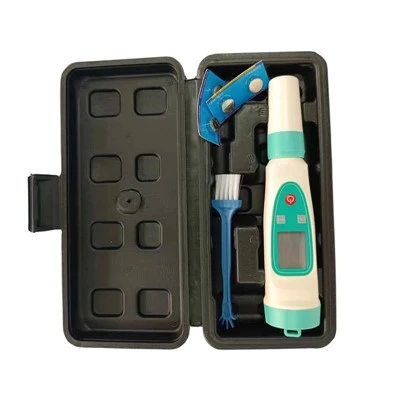
If you’re ready to stop dealing with inaccurate readings, frequent maintenance, or regulatory headaches, feel free to connect with our team to chat through your needs and find the perfect chlorine dioxide analyzer for your operation. We’re here to help you every step of the way.
Buffered Solution References:
- USEPA. (2021). Analytical Methods for Chlorine Dioxide in Drinking Water. Office of Water, U.S. Environmental Protection Agency.
- American Water Works Association (AWWA). (2019). Water Treatment Operator Handbook, 6th Edition. AWWA.
- Food and Drug Administration (FDA). (2022). Guidance for Industry: Sanitation in Manufacturing, Processing, Packing, or Holding of Food. FDA.
- Zhang, L., et al. (2020). Interferences in Chlorine Dioxide Measurement: A Review of Common Analytical Methods. Journal of Water Process Engineering, 38, 101652.
- Occupational Safety and Health Administration (OSHA). (2023). Chemical Safety for Laboratories: Handling and Storage of Reagents. OSHA.
Hangzhou Qiwei Instrument Co., Ltd.
Hangzhou Qiwei Instrument Co., Ltd. is one of the most reliable manufacturers and suppliers of chlorine dioxide analyzer in China, featured by quality products and good service. Please rest assured to buy bulk durable chlorine dioxide analyzer in stock here from our factory. We also accept customized orders.
Address: Room 101, Building 25, No. 488-1, Donghu North Road, Linping District, Hangzhou City, Zhejiang Province, China
E-mail: info@qiweilab.com
WebSite: https://www.qiweilab.com/
