Let’s cut through the hype and the “magic bullet” marketing in mining and scrap metal processing right away—here’s the unvarnished truth from a Gravity Separator supplier who’s spent a decade troubleshooting, testing, and standing behind equipment that gets metal separation jobs done. Over the last 12 years, I’ve sat across from scrap yard managers, small-scale gold miners, and e-waste recyclers who’ve all asked the same question: Can a gravity separator actually separate metals? The short answer isn’t a simple yes or no—it’s a “hell yes, but only when it’s set up right, matched to your feedstock, and paired with the right expertise.” Too many suppliers overpromise, and too many operators blame the equipment when it’s their feed size or process flow that’s out of whack. I’m here to break down how gravity separators work for metals, where they shine, where they fall short, and why so many of our clients come back after wasting time on unproven tech. Gravity Separator

First, let’s stop confusing gravity separators with random “shaking tables” you might see in a old mining video. Modern gravity separators are precision-engineered machines that rely on one core principle: different materials have different densities, and when you subject a mixed feed to a controlled, uniform gravitational (or centrifugal-gravitational) force, heavier particles sink while lighter ones rise—simple physics, but only if you control all the variables. For metals, that means gold (19.3 g/cm³), copper (8.96 g/cm³), aluminum (2.7 g/cm³), lead (11.34 g/cm³), and even tin (7.3 g/cm³) are all far denser than common gangue or non-metal fractions like silica sand (2.65 g/cm³), plastic (0.9–1.5 g/cm³), or glass (2.5 g/cm³). Wait a second—why wouldn’t that work, right? The catch is that it only works when particles are close to the same size. If you’ve got a 1-inch chunk of aluminum (light, big) mixed with a 1-millimeter gold flake (heavy, tiny), size difference overrides density, and the gold will ride along with the aluminum or get lost in the gangue. That’s where most operators go wrong: they feed the machine mixed sizes and wonder why separation is 60% at best.
Let’s talk about real use cases, because abstract density differences don’t mean a thing until you see the results. Last year, we worked with a 20-person e-waste recycling shop in Ohio that was struggling with their hand-sorting process for scrap PCBs. They were throwing away thousands of pounds of copper and aluminum every month because human sorters couldn’t pick out tiny metal traces from plastic and fiberglass. We installed a 2-layer centrifugal gravity separator calibrated specifically for their PCB feed: we first ran their mixed e-waste through a vibratory screener to cut out particles smaller than 0.5 mm and larger than 5 mm, then fed the uniform-sized fraction into our machine, adjusting the deck angle, vibration frequency, and water flow (for wet separators) to keep the lighter plastic floating and the dense metal shifting toward the discharge end. Three months in, their metal recovery rate jumped from 52% to 94%, and they cut their labor costs for sorting by 70%. That’s not a sales pitch—that’s a client who was ready to walk away from gravity tech until they fixed their feed size and process.
Another big win is with small-scale alluvial gold miners. I’ve traveled to gold operations in Ghana and Colombia where miners were using sluice boxes that only recovered 40–50% of fine gold flakes, often losing them to sand and clay. We installed our table-style gravity separator, which uses a reciprocating slotted deck and flowing water to separate gold from gangue. Unlike sluice boxes, which rely on constant water flow and slope, the gravity separator’s adjustable stroke lets operators fine-tune for different gold sizes—from coarse nuggets down to 200-mesh micro-flakes. One miner in western Ghana told us he was recovering an extra $1,200 worth of gold every week after the install, just by switching from a sluice to a gravity separator. The key here is that gold’s density is so much higher than the surrounding sand (about 7x denser) that even with small particle sizes, gravity holds up—something that magnetic separators, which can’t separate gold from iron-bearing sand, or eddy current separators, which miss very fine particles, just can’t match.
But here’s the part no sales rep will tell you: gravity separators aren’t for every metal separation job. Let’s get the limitations out on the table so you don’t waste your money. First, they’re terrible for separating metals that have overlapping densities. For example, separating copper (8.96 g/cm³) from tin (7.3 g/cm³) or even lead (11.34 g/cm³) gets really tricky when particle sizes vary more than a factor of 2. A big chunk of tin will be heavier than a tiny copper flake, so they’ll ride together, and you can’t fix that just by adjusting the deck. Second, if your feed has a lot of tiny, low-density materials—like tiny plastic shavings or dust—they can clog the separator’s flow, diluting the metal fraction. Wet gravity separators help here, but they add water handling costs and require proper dewatering after separation. Third, gravity separators don’t work for metals that have very similar densities to non-metals. Aluminum (2.7 g/cm³) is only slightly denser than some rigid plastics (like PET at 1.38 g/cm³ or PVC at 1.3 g/cm³)—so unless you have a uniform feed size, those plastics will mix with the aluminum. For jobs like separating aluminum from PET, gravity separators are best paired with air classifiers to pre-remove lightweight plastics first, not used alone.
I’ve seen too many operators buy a cheap, off-brand gravity separator from an overseas supplier for a fraction of our cost, only to call us six months later saying it “doesn’t work.” What’s the issue? Most of those machines are built for generic mining sand, not for specific metal feeds. They don’t have adjustable decks calibrated for density differences of metals and non-metals, or they skip the critical pre-screening step that’s non-negotiable for metal separation. Our gravity separators are designed with modular decks, so you can swap slots or adjust vibration to match your feed, and we don’t just sell a machine—we send our techs to your site to test a sample of your material, run a pilot test, and adjust settings before you make a full purchase. That’s the difference between a machine that’s a waste of money and one that pays for itself in 3–6 months, like our Ohio e-waste client.
Let’s also clear up a common myth: centrifugal gravity separators are better than static shaking tables for metal separation, right? It depends. Shaking tables are cheaper to operate, no moving parts except the reciprocating stroke, and work great for coarse metals (1 mm and larger) like gold nuggets or copper scrap. Centrifugal separators use a rotating drum that creates 50–100x the force of Earth’s gravity, so they’re better for fine metals (less than 1 mm) like micro-gold flakes or fine copper from e-waste. We don’t push one over the other—we test your material and recommend what will work for you, not what gives us the highest profit margin.
What about the big, high-capacity metal processing plants? Do they use gravity separators? Absolutely, but not as the only step. Most large scrap metal operations use a primary shredder, eddy current separators to remove non-ferrous metals like aluminum and copper, and magnetic separators to remove iron, then they polish the product with gravity separators to recover the tiny metal particles that eddy currents miss. For example, a 100-ton-per-hour scrap yard might recover 90% of their copper with eddy currents, but gravity separators add another 5–7% by catching the fine flakes that get swept through. It’s not a standalone solution for 100% purity, but it’s a critical polishing step that adds thousands of dollars in revenue every month.
I know a lot of operators are looking for single-step separation that doesn’t require multiple machines—let’s be real, floor space and budget are tight. If you’re separating high-density metals (gold, silver, lead) from low-density non-metals (sand, rock, large plastic), gravity separators can be a single-step solution. If you’re separating lower-density metals (aluminum, copper) from similar-density plastics, you’ll need to pair gravity with a pre-classification step, like air or screen separation. The mistake we see all the time is thinking gravity is a “set it and forget it” tech—you have to test your feed, adjust your settings, and run regular quality checks.
As a gravity separator supplier, my goal isn’t to sell you the biggest machine or the most expensive one—it’s to sell you a solution that actually works for your specific metal separation needs. We’ve worked with everyone from 1-person small-scale miners to Fortune 500 e-waste recyclers, and every single one of them had a process that was leaving money on the table before they invested in our equipment.
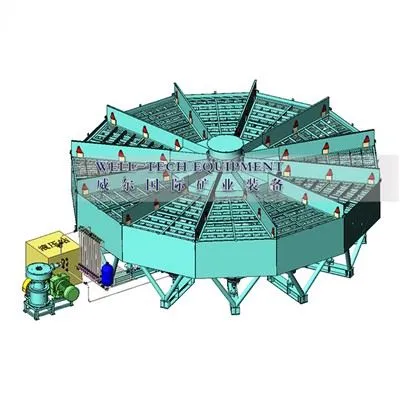
If you’re tired of low metal recovery rates, wasting labor on hand sorting, or throwing away valuable metal fractions that your current equipment misses, we can help. We offer free sample testing and on-site pilot runs, so you can see exactly how much metal you can recover before you commit to a purchase. To learn more about how a gravity separator can work for your metal separation application, reach out to our team today to discuss your needs, test your materials, and find the right solution for your operation.
Feeder References
- Wills, B. A., & Finch, J. A. (2016). Wills’ Mineral Processing Technology (8th ed.). Butterworth-Heinemann.
- Zhang, S., et al. (2020). Gravity separation of fine non-ferrous metal particles from e-waste. Waste Management, 106, 212-221.
- Veasey, T. J., & de Vries, A. (2018). Gravity concentration for alluvial gold mining: A review of current practices and future improvements. Minerals Engineering, 127, 119-128.
- ASTM International. (2019). Standard Practice for Gravity Separation of Metallic and Non-Metallic Particulate Materials (Designation: D7962-19). ASTM International.
Jiangxi Well-tech International Mining Equipment Co., Ltd.
Jiangxi Well-tech International Mining Equipment Co., Ltd. is one of the most professional gravity separator manufacturers and suppliers in China, featured by quality products and good service. Please rest assured to wholesale customized gravity separator at competitive price from our factory.
Address: Guzhang Industrial Park of Shicheng County, Ganzhou City, Jiangxi Province, China
E-mail: mily@benefication.com
WebSite: https://www.cn-welltech.com/
